|
10. CRITICISM OF THE NEW AGE
Some of your books refer in a critical manner to the “new age,” and so does your Citizen Initiative website. Can you define this “new age” any further?
The so-called new age is a hybrid phenomenon that commenced during the late 1960s, in the wake of the hippy boom in America. However, there were earlier references to a “new age” that were assimilated by this conglomerate trend, for instance, Alice Bailey’s Arcane School jargon. The younger generation at that time (late 1960s) became interested in occultism and Eastern religions. Much of this was a passing fad, convincing research being noticeably absent. Bits and pieces like Jung and ecology were added to the mix, which became increasingly commercial and promoted by various “alternative” bodies, notably the Esalen Institute of California. The resulting Human Potential Movement was a commercial extravaganza of sensational "workshops."
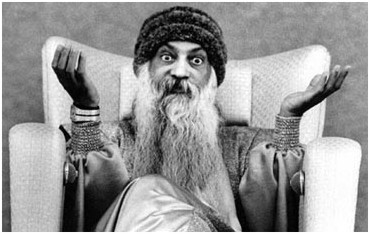
Many entrepreneurs moved in for the profits, including the notorious Indian guru Bhagwan Shree Rajneesh (1931-1990), whose ashram at Poona attracted many young Westerners. These people found varying degrees of euphoria and disillusionment in “therapy” and “liberation” fare provided. Even permissive Esalen concluded (too late) that the Rajneesh scenario was out of control, a matter confirmed by subsequent events in Oregon, where terrorist activities emerged within the Rajneesh movement during the 1980s.
Rajneesh could never have gained support without the ballast afforded by uncritical beliefs of Western neo-hippies, who subscribed to alternative therapy, hedonism, and popularised Eastern religion. Rajneesh claimed to be an expert on various Eastern mystical traditions, interposed lewd jokes in his discourses, resorted to cued laughter for effect, and relied upon the sensual tendencies of his audience to keep them in thrall. The Indian intelligentsia were easily able to point out his deviations. In contrast, the Esalen bandwagon was so easily deceived. The aberration became known as Rajneesh NeoTantra, as distinct from traditional forms of Hinduism.
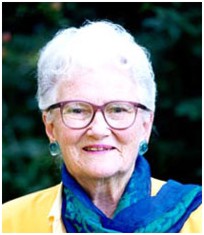
Bhagwan Shree Rajneesh, Eileen Caddy
A major haven for Esalen style commercial “workshops,” Grof lore, Rajneesh NeoTantra, and dubious “neoshamanism” was the Findhorn Foundation, situated in Moray, Scotland. The figurehead of this organisation was Eileen Caddy (1917-2006), who gained the reputation of turning a blind eye to internal discrepancies (Myth and Reality and Letter to BBC Radio). The Findhorn Foundation bookshop and annual programme attested many doubtful trends which were sold to visitors for high prices. The new age “anything goes” is far less sophisticated than converts are led to think. The promotion of serious commercial drawbacks in tandem with ecology is no proof of wisdom.
During the 1990s, ecology became a tool for expansion at the Findhorn Foundation, which gained NGO status even while covering up economic mismanagement. An erring management team was obliged to resign at this period. The Foundation management teams of the 1990s became increasingly commercial in operation, demonstrating capitalist principles that were no different to those existing in the old age. Economic consultants like Alex Walker favoured the privatisation of communal assets. A massive debt was concealed for years until 2001. The interminable “workshops” continued as a basic source of revenue, charging exorbitant amounts for misleading activities. The absence of due critical acumen in the new age is lamentable.
At the Findhorn Foundation, there was much talk of sustainability. That gesture to ecology was here used as a commercial “workshop” motto in the face of severe debt. The medium for UN approval was the Holistic University of Brazil (founded by Pierre Weil); the syllabus of this project was different to that of conventional Universities throughout the globe. In 2006, the UN branch known as UNITAR endorsed the Findhorn Foundation project in sustainability. CIFAL Findhorn Ltd was the consequence. That was only one facet of the Findhorn Foundation. Everything else continued just as before. Thus CIFAL ecology existed alongside alternative therapy, neoshamanism, the Game of Transformation, or whatever else was being sold to consumers. Critics of this phenomenon were obscured by the myopia of a UN bureaucracy, who ignored relevant communications sent to them (CIFAL Findhorn: A Critical Statement). CIFAL auspices at Findhorn ceased in 2018.
In 1995, the Findhorn Foundation were dubbed the “mafia cult” by a Scottish newspaper. In contested circumstances, that organisation soon after became endorsed by the UN and granted NGO status in 1997. During this process, the Foundation concealed economic problems and eliminated any record of dissidents. The glorification of commercial mysticism, plus evasionism on the part of United Nations bureaucracy, were ongoing features of a disturbing phenomenon. The deference to ecology on the part of the Findhorn Foundation is no excuse for the ethical shortfalls that became visible. UNESCO and UNITAR are centred on the Continent, in Paris and Geneva. Events in Scotland were not duly monitored by those organisations, whose office schedule is not beyond scope for improvements.
A very uncritical but influential patron of the Findhorn Foundation was Pierre Weil (1924-2008), an advocate of peace. This enthusiast of “holistic” topics did not prove resistant to Grof lore. Dr. Weil was nevertheless sanctioned by UNESCO. The curriculum of his International Holistic University in Brazil continued to be regarded as very inadequate by critics. Weil tended to a romantic view of human nature, being content with surface assessments of “new age” alternatives. He believed that, for instance, Eileen Caddy’s “divine voice” lore (God Spoke to me) and Grof commercial transpersonalism, were suitable partners for ecology.
Pierre Weil authored a book entitled The Art of Living in Peace (2002), published by UNESCO. He gave “workshops” on this theme at the Findhorn Foundation during the 1990s. Although not directly his fault, UNESCO-associated “peace talk” was one of the fronts used by this organisation in their suppression of dissident views. A graphic instance of “peace workshop” discrepancy and lip service is reported in Stephen Castro, Hypocrisy and Dissent within the Findhorn Foundation (1996), p. 110. See also Facade of Conflict Resolution and Peace.
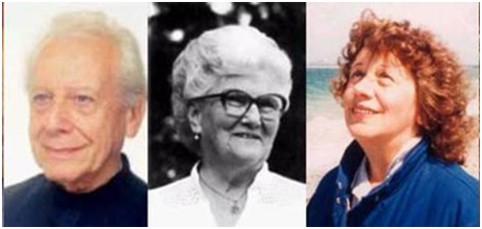
l to r: Pierre Weil, Eileen Caddy, Kate Thomas
In the year 2000, Pierre Weil received an honourable mention from the UNESCO Director General Koichiro Matsuura in relation to the UNESCO Prize for Peace Education. This information was relayed on a UNESCO Media Advisory. A discrepant fact, in this peace talk scenario, was the failure of the same Director General to reply to a relevant and pressing letter, from a British woman (Kate Thomas) who was continually suppressed and victimised by the Findhorn Foundation management. See the data at Letter of Kate Thomas to UNESCO. The influential UN bureaucracy proved unreliable for the art of living in peace.
The failure of three UN departments to answer relevant letters is significant. This shortcoming tends to highlight the ambiguity of certain UNESCO Publishing/UNIPAIX promotional statements. One of these served for the peace book by Weil abovementioned:
Providing the foundations for a peaceful society requires more than directives; it needs an in-depth understanding of values, respect for others, and a thorough awareness of the importance of sustainable development and protection of the environment.
The talk about values has degenerated into cliché. Respect for others is not practised by some alternative organisations. The sustainability theme has provided a facesaver for attendant abuses, a matter clearly in evidence at the Findhorn Foundation. A peaceful society was not demonstrated by this organisation, but instead a mode of commercial manipulation of an affluent clientele, an exercise afflicting dissidents with stigma. See further Findhorn Foundation Problems and Kate Thomas and the Findhorn Foundation. See also my Letter to Robert Walter MP (2008) and Commercial Mysticism.
The affluent clientele who fuel new age “workshops” have believed many of the clichés that deter onlookers. “Creating your own reality” was for long one of the subjective accents found in this sector. “Be here now” is another favourite, denoting present-centredness, fitting discrepantly into the strongly premeditated time schedule of so many commercial programmes. The very saleable Now costs money, a transaction resulting in prodigious confusion about what is being marketed. Richard Alpert started that particular gimmick. This confused associate of Timothy Leary went to India with a supply of LSD to commence his disconcerting neo-hippy career under the pretentious name of Baba Ram Dass. A hippy icon and Yoga practitioner, Alpert later declared himself to be a phoney holy.
On a more general level, many problems have arisen in relation to the activity of cults and suspect organisations, existing from America to Japan (see articles 23 and 24 on this site). There is sufficient concrete data to justify pronounced fears about public wellbeing for many years to come.
Some new age trends were dignified by the phrase Human Potential Movement (HPM), an American innovation of the 1960s strongly associated with Esalen (Shepherd, Minds and Sociocultures Vol. One, 1995, pp. 61ff). The HPM was strongly related to humanistic psychology, evocative of Abraham Maslow (1908-1970) and the acutely generalised peak experiences. One danger was Aldous Huxley, who lectured at Esalen in the early 1960s. This British writer became a symbol of mescaline and LSD, factors influencing an aborted "perennial philosophy." The HPM was criticised for indulging in “psychobabble” and narcissism. This conglomerate trend was sustained for many years, including a belief in “self-realisation,” a theme lacking the more demanding ingredients found in Hinduism. The tenure of Stanislav Grof at Esalen was part of the HPM confusion; some enthusiasts described Grof as a unique transpersonal sequel to the HPM. The status of “transpersonal psychology” is in strong dispute.
Another trend of “self-help,” promising “empowerment” and happiness, is strongly contradicted. Such fashions so often originated in America, where dotty affluence often seems incapable of any commonsense analysis. The “self-help and actualisation movement” was long ago estimated to be worth some ten billion dollars in America alone. The exponents talked about “transformation” and “personal growth,” while charging thousands of dollars for their seminars and “workshops.” The commercial drive continues.
Transformation is a very commercial word in the new age, now often called “new spirituality” by partisans. The entrepreneurs invariably react to the competition afforded by Christian tele-evangelists. To critical spectators, both of these camps are theatrical demonstrations of rhetoric.
|