|
22. WIKIPEDIA, GERALD JOE MORENO, GOOGLE
How do you view the Wikipedia project? Do you see this online “free encyclopaedia” as being progressive or flawed? Some of your web articles describe how you were snubbed on Wikipedia by sectarian interests. Can you enlarge further?
The Wikipedia project is controversial. Some articles are detailed, supplying helpful bibliographies. At the same time, many academics have expressed strong reservations about the project as a whole. There have been diverse complaints about the accuracy of many Wikipedia articles. The disagreements on discussion pages are notorious.
There is the major issue of cults, suspect organisations, and questionable entrepreneurs gaining a foothold in Wikipedia. This happens because of the extensively pseudonymous componency of editorship. The only indication that gullible readers have of any drawbacks are references to controversies or criticisms, and these (when present) are sometimes too brief or ambiguous for the general reader to decode appropriately.
Thousands of pseudonymous volunteers for the Wikipedia project have been viewed as a drawback. There is ample indication of disagreement with Wikipedia policies. Many articulate critics have resisted shortcomings in the Wikipedia method of operation. See Wikipedia Flaws. In his complaint entitled Corruption of Wikipedia, Professor Carl Hewitt relayed the accusation that "Wikipedia resembles the Third Reich rather than a free media."
Diverse problems are mentioned at Criticisms of Wikipedia. See also Wikipediocracy. My own full length contribution is Wikipedia Anomalies [and the Sequel]. I am unable to view Wikipedia as being progressive, according to the standards demonstrated in my own case.
The following data, in 21 sections, is a presentation of the difficulties resulting from a Wikipedia User page of 2006 that was for long displayed on Google Search to my disadvantage. I have never been a Wikipedia contributor. I had cause to regard the stigmatising User page (of American origin) as an infringement upon my rights as a British author and publisher. The offensive User page was not deleted by Wikipedia until 2012. See also Analysis of a Cultist Defamation.
CONTENTS KEY
22.1 The Sectarian Cordon in Wikipedia
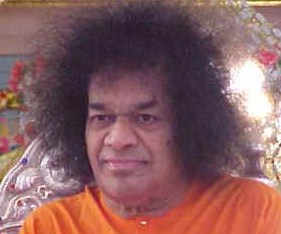 
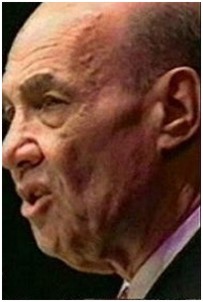
l to r: Sathya Sai Baba (died 2011), Gerald Joe Moreno (died 2010)
|
In October 2006, I discovered a Wikipedia User page that was very hostile towards my publishing effort known as Citizen Initiative (CI). The pseudonym of the attacker was here SSS108. I did not at first know who the aggressor was. Afterwards some academic friends were able to trace the identity of this person, who transpired to be a salient American internet defender of the controversial Indian guru Sathya Sai Baba (d.2011). He had become a Wikipedia editor in relation to that guru.
Gerald Joe Moreno appears to have become a devotee of Sathya Sai Baba at the age of eighteen. This event occurred in 1988, when he visited Puttaparthi ashram. One of his web pseudonyms was Joe108; in general, he seemed to prefer the name Joe. Some commentators used the name Joe Moreno for identity purposes.
The web career of Gerald Joe Moreno lasted from 2004 (or slightly earlier) until his death in July 2010. He became notorious for misrepresentation of his opponents. He gained a reputation for quoting out of context, assuming worst-case interpretations, and employing ad hominem argument. His tactics were ruled by considerations of defending Sathya Sai Baba against all criticism.
In 2006, Moreno was zealously keen to downgrade my books because of critical appendices about Sathya Sai which appeared in only one of my works. He urged that reference to myself should be removed from Wikipedia, employing a pretext that did not convince spectators. This tactic was part of a more general strategy, in which Moreno attempted (on Wikipedia) to cordon sources critical of his guru, more especially the ex-devotee Robert Priddy (a retired academic in Norway). Gerald Joe Moreno twice succeeded in getting the Wikipedia administration to freeze the Wikipedia article on Priddy for editing, a situation that was resolved in favour of Priddy by Wikipedia administrators in 2007. Years later, the Robert C. Priddy article was deleted in 2012 by a new editor, there being no track on former occurrences.
Moreno argued that a detailed book of mine should be censored because it was self-published. Very different categories of “self-published” material exist, ranging from the puerile to the serious. Self-published books of a serious nature have been cited by academics, who are furthermore aware of the superficial nature of many books published by mainline commercial publishers, who dominate the book trade. A basic criterion for recognition of a book is due information content. See further article 9 on this website. Vast quantities of internet materials are “self-published,” including those of Gerald Joe Moreno. Dismissive criteria require to be based upon more substantial grounds than sectarian aversion to unwelcome details. Wikipedia criteria for self-published works are reliability and citation; several of my annotated books were cited in Wikipedia articles by 2008.
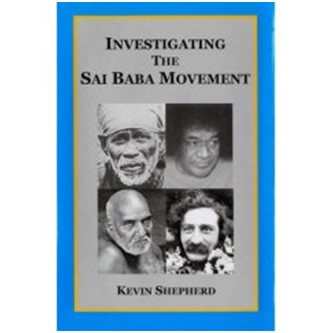
The Wikipedia User page (Oct. 2006) of SSS108, alias Gerald Joe Moreno, commenced with a disputed quote in which my name was accompanied by that of Robert Priddy. The latter was detested by Moreno as a rival interpreter. Priddy sources were employed in one of the appendices to my Investigating the Sai Baba Movement (2005). The SSS108 User page reported a dialogue between four contributors. There were frequent objections to the dismissive angle by Wikipedia editor Andries Krugers Dagneaux, who clearly favoured the quote in dispute (strongly associated with him). The Wikipedia quote read as follows:
According to Kevin Shepherd, the former national leader of the Sathya Sai movement in Norway, Robert Priddy, expressed the opinion that Sathya Sai Baba was an accomplice to the 1993 murders, among others based on information given to him by his friend V. K. Narasimhan.
Moreno employed his disapproval of this quote as a means of applying inconsequential status to Citizen Initiative (my publishing project). He urged the “removal of reference to Shepherd” on the basis of a self-publishing imprint that was allegedly irrelevant to Wikipedia. He emphasised an absence of online references to the British author, who was clearly despised for having approvingly cited the Moreno “Anti-Sai” rival Robert Priddy.
The ex-devotee Priddy did indeed emphasise (many times) the intimate connection of Sathya Sai with the controversial "bedroom murders" at Puttaparthi ashram (in Andhra). Those murders occurred in the private quarters of the guru. The murder of four intruders by the local police became a major issue amongst conscientious objectors, who found that there was no due investigation into, or satisfactory explanation of, the anomaly. Very briefly, four young men armed with knives entered the bedroom of Sathya Sai one night. They were stopped by personal attendants, two of whom were killed in the struggle that ensued. The guru escaped. The intruders were shot dead in his bedroom by the police. The government did not proceed with a due investigation. However, pictures of the bloodstained corpses gained web exposure. Different explanations of this violent event gained circulation.
I will quote here the passage in my book that was the source for the disputed Wikipedia quote:
During his visits to the guru’s ashram since 1984, Priddy had encountered suspicious details, though he had explained these away according to the method of exegesis favoured within the sect. The crunch came in 1996, when his respected friend V. K. Narasimhan told him in secret some key facts about the notorious murders at the ashram in 1993. The shock caused Priddy to investigate further, a move which led to his increasing disillusionment. The evidence finally convinced him that Sathya Sai was an accomplice to murder. (Investigating the Sai Baba Movement, p. 293)
In his dismissal of Citizen Initiative, Moreno relied heavily upon his email contact with two book trade agencies who gave inadequate replies. He cited a very brief communication from Sheffield University, whose sales representative stated that she had never heard of Citizen Initiative and could find no trace of that imprint in any list of publishers. Many university outlets in Britain are small, declining to stock books that are not officially prescribed for academic curricula; they frequently evidence an ignorance of unprescribed books, as myself and others have found. The imprint under attack from the webstalker was in fact listed in a major publishing directory, having both printed format and online representation. That media was quite sufficient for most small publishers not claiming giant commercial status. The Nielsen Bookdata index was a relevant supplement.
 |
The sectarian User SSS108, alias Gerald Joe Moreno, also implied that the book of mine which he attacked did not use “multiple independent primary sources,” an accusation disproven by due inspection of the 480 annotations contained in that book. Those annotations extend to over one hundred pages (Investigating the Sai Baba Movement, pp.163-268). Onlookers concluded that Moreno had never seen a copy of the book he maligned.
I was told that I had strong grounds for repudiating the dismissive Wikipedia User page, and not merely because this proscribing gesture was presented by a person soon afterwards banned from Wikipedia indefinitely, in March 2007, for sectarian activist editing.
22.2 Redundant Wikipedia User Page
Despite his ban from Wikipedia, Gerald Joe Moreno was gratified that his proscribing and distorting User page against myself still showed prominently on Google Search. Such loopholes in Wikipedia protocol are inevitably the subject of complaint. Over five years elapsed before Wikipedia rectified the oversight (in February 2012).
This episode was edged by a factor of alleged complicity on the part of Dr. Michael Goldstein, a very prominent American representative of the Sathya Sai Baba Organisation. This man was believed by ex-devotees to be giving strong support (and payment) to Gerald Joe Moreno. However, quite apart from this factor, the redundant Wikipedia User page, under discussion here, exhibited a sectarian thrust very obvious to careful analysts. An American living in New Mexico, Moreno was a devotee of Sathya Sai Baba from his late teens. His primary website saisathyasai.com [no longer visible] became known as an epic of militant apologist strategy, in which all critical voices were adversely depicted in terms of “smear campaigns.” Strong allegations against Sathya Sai Baba were routinely repudiated by Moreno.
The User page at issue was entitled User:SSS108/Kevin Shepherd. This comprised a form of defamation and dismissal aiming at literary and publishing efforts, though based solely upon three appendices relating to Sathya Sai Baba. Those appendices (Investigating the Sai Baba Movement, pp. 269-301) were implied as containing “biased or malicious content.” In fact, those documents were relaying some pressing ex-devotee internet accounts, and also other sources (including legitimate BBC reports available online) concerning the strongly alleged misdemeanours of Sathya Sai Baba. The BBC sources were a consequence of the famed 2004 documentary The Secret Swami, widely regarded as a milestone in televised cult investigation. The pro-Sai activist Gerald Joe Moreno clearly wanted to stigmatise my appendices, and their contents, as “secondary sources” which could be dismissed from Wikipedia files. Whereas academics consider appendices in an annotated work to be a legitimate extension for controversial materials.
Moreno insinuated that the use of online sources is not a reliable measure. He himself had only produced online materials, having no published books to his credit. The Wikipedia guidelines looked ridiculous in the instance of the banned User Gerald Joe Moreno. One could easily argue that if internet sources are considered secondary, then Wikipedia can be relegated.
There is the further matter of textual content in the misrepresented book, snubbed by a sectarian mentality resorting to a Wikipedia User page. The text of Investigating the Sai Baba Movement (pp.1-161) deals with three entities who are now the focus of three different movements, namely Sai Baba of Shirdi, Upasani Maharaj, and Meher Baba. These deceased entities were controversially appropriated by certain Sathya Sai Baba supporters (not Moreno) as ballast for a “Sai Baba Movement.” This theory tends to strongly revolve around the claim of Sathya Sai Baba to be the reincarnation of Shirdi Sai Baba, who died in 1918. The reincarnation claim is not convincing in other sectors, either amongst contrasting movements, or the larger audience of readers and assessors. Moreno did not mention any of these pertinent matters in his User page dismissal.
22.3 Rick Ross Complains About Jossi Fresco on Wikipedia
One of the contributors to the dialogue, reported by Moreno on his Wikipedia User page, was named as Jossi. This editor was evidently in basic agreement with Moreno about removing a disputed quote from Wikipedia on the subject of Sathya Sai Baba (although Jossi was not as systematic as Moreno, who was the major opposing contributor). Jossi chose to emphasise the disputed quote in terms of “highly controversial material,” a deliberation which Moreno furthered in terms of “a potentially libellous comment.” See also 22.1 above.
I learned that Jossi was the Wikipedia administrator/editor Jossi Fresco, a long-standing devotee of the controversial figure known as Guru Maharaji, who led the Divine Light Mission in the 1970s. That project gained the reputation of a cult on the media. Strong criticism caused Maharaji to change his name to Prem Rawat, while his organisation was renamed Elan Vital. According to cult analyst Rick Ross: “Jossi not only has used his editor’s position [on Wikipedia] to stifle criticism of Prem Rawat, but has also more generally manipulated Wikipedia entries on the subject of cults and related topics.”
Ross further commented that any complaints on such matters were likely to be addressed to the “Conflict of Interest Noticeboard” on Wikipedia. The snag being that “Jossi Fresco created this board.” Ross added that the Wikipedia supervisors had been informed about the discrepancies at issue. However, no rectification had occurred to date. An official disclaimer was employed as a general warning against possible error. Ross concludes with the statement: “Jossi Fresco is a glaring example of why Wikipedia is at times a less than credible internet resource, and per its disclaimer no one should automatically accept ‘the validity of information found’ there.”
Rick Ross provided his readers with the relevant disclaimer: “Wikipedia cannot guarantee the validity of the information found here.” See Rick Ross “Conflict of Interest at Wikipedia ‘Conflict of Interest Noticeboard’” (Feb. 2008) at cultnews.com.
22.4 Wikipedia Bans Joe Moreno in March 2007
Wikipedia grew suspicious of Gerald Joe Moreno. That sectarian gained a reputation for making personal attacks on other Wikipedia editors. The Wikipedia administrator known as Mel Etitis was in friction with Moreno, whose truculent disposition contributed to his official and indefinite ban from Wikipedia in March 2007. This ban occurred on the grounds of unacceptable activist editing. See Requests for arbitration. See also 22.14 below.
Moreno subsequently posted complaints about Wikipedia that were viewed by many spectators as a distortion of events. Critics said that he did not at first refer to the fact of his ban, instead giving the impression that he had decided to withdraw from Wikipedia. Moreno afterwards posted My Ban on Wikipedia at saisathyasai.com. This item was also entitled “Mel Etitis and his ‘Peter J. King’ Sockpuppet Cover-up on Wikipedia.” As the title indicates, the item is strongly pitched against the Wikipedia administrator Mel Etitis (associated with Oxford University), who reprimanded Moreno for expressing personal attacks against other Wikipedia editors.
Another item found on the Moreno primary website was Sathya Sai Baba Wikipedia Article: Biased and Controlled by Ex-Devotees. The theme here is that Moreno attempted to alter the bias during his tenure as a Wikipedia editor of the article in question. The pro-Sai activist here refers to his rival Andries Krugers Dagneaux (another Wikipedia editor) as “a highly critical ex-devotee.” Such credentials were considered reprehensible in the sectarian interpretation. On Dagneaux, see also 22.9 below.
In general, Moreno became known for his personal attacks upon, and all-out resistance to, critics of Sathya Sai. He aimed continually at ex-devotees of Sathya Sai Baba, especially the prominent Robert Priddy of Norway, a retired academic of Oslo University. A critic objecting to this tendency was the Wikipedia editor Martin Alan Kazlev, who outlined the Moreno problem in some web memos (no longer showing). Kazlev described Moreno in terms of “a degree of shadow projection that I have not seen associated with any other guru movement I have investigated.”
Kazlev was initially sympathetic to Moreno, but subsequently very disillusioned. He described himself as a former long-term devotee of Sathya Sai Baba. When Kazlev contacted the ex-devotee rivals, he found that they were quite different to the hostile pro-Sai depiction. He ended up agreeing with the dissidents. Moreno subsequently attacked Kazlev as a believer in new age lore. For other critical sources, see Brian Steel, Evidence of an Internet Activist in Action.
My own reaction to Moreno arose in a very different context to that of ex-devotees. I was a complete outsider to the Sathya Sai movement, and also a substantial alien to the "new age" ideas associated with centres like Esalen.
22.5 Sectarian Attack Against Objection Relating to Wikipedia Cordon
In late August 2007 appeared my protesting webpage Wikipedia Issues and Sathya Sai Baba (subsequently amplified and updated). This four-part commentary on diverse events was initially left in the third person on pressing advice. The contents dwelt upon the cordon created in Wikipedia by Gerald Joe Moreno prior to his ban, and also defended my publishing venture against his Wikipedia User page. Some additional details were given, including the FAIR versus INFORM controversy in Britain, relating to cults and suspect organisations.
A month later, Moreno posted an acutely disparaging webpage on his primary website saisathyasai.com. This was entitled Citizen Initiative and Kevin R. D. Shepherd, displaying a set of headings clearly designed to repudiate. There were seventeen headings, fourteen of which specified my name. The denunciation and defamation was accompanied by a blog boast from Moreno on digg.com. This extension asserted that he had exposed me as “a shabby and biased researcher.” See 22.8 below. However, the consensus of informed opinion strongly disagreed. Moreno’s reaction to my defence was extremist, typically attempting to depict his subject (myself in this instance) in the worst possible light, while exhibiting pronounced rhetorical flourishes and missing context. Moreno gave the impression that I was a literary criminal who had very unfairly attacked him from the standpoint of a fanatical critic of Sathya Sai Baba. The gist here is that he was totally in the right, and that I was totally in the wrong.
The attack webpage commenced with a libellous preamble. There followed accusations ranging from Moreno’s disapproval of The Guardian newspaper, plus a major BBC documentary (The Secret Swami), to his customary misrepresentation of Wikipedia events and his usual snubs of ex-devotees. The preamble was markedly hostile, exhibiting an excess of sectarian animosity. That item was partially entitled Kevin R. D. Shepherd Reveals his Bias. This was discernibly a retort to the title of Part One of my webpage, which included the phrase Gerald Moreno’s bias against Robert Priddy and Kevin R.D. Shepherd. That phrase applied in a context of the cordon achieved by Moreno’s Wikipedia editorship in 2006. Wikipedia protocol enjoins a “neutral point of view” as a mandatory ideal. Wikipedia arbitrators evidently did not feel that Moreno had achieved the requirements for neutrality when they banned him indefinitely in March 2007.
Moreno was keen to contradict my defence against his hostile Wikipedia User page. The sequel was more extreme than the User page. Elements of the popular American blog style were incorporated in the sequel, but did not show on the User page. Moreno’s basic medium of communication were blogs and other web media of the compact variety. His primary website reflected a blog format that not every visitor found compelling as a reference source. His habit of grading other (non-Moreno) sources according to a pro-Sai activist set of priorities was a further deterrent to non-sectarians.
The vehement blogger now accused me of not representing his contributions, when in fact I had linked to his primary website (containing those contributions) and quoted from his FAQ. My detailed coverage of his FAQ included the complaint of Moreno that “Anti-Sai” websites did not link to his own website, a factor which he interpreted in terms of an “agenda of hate.” Because of this accusation, I was careful to link to the Moreno website in the bloc of web links I supplied on my Wikipedia Issues webpage. Moreno chose to ignore my gesture. His accompanying libels and snubs tend very much to indicate that Gerald Joe Moreno was the party cultivating an agenda of hate. I was subsequently advised to remove my link to his site in view of the extreme belligerence of the sectarian activist in my direction.
Some ex-devotees would not link to Moreno webpages for technical reasons that are very understandable (see 22.21 below). As an outsider to the sect, I was an exception to their tendency in making a link to Moreno's primary website, a link that was clearly visible on my webpage. Such gestures of inclusion were wasted upon the pro-Sai activist.
The Moreno contributions did not prove the innocence of Sathya Sai Baba. Instead an extremist tactic was demonstrated, extending to mockery and character assassination of outspoken critics. The markedly partisan tone of Moreno web output lent support to an ex-devotee contention: Moreno was in league with Dr. Goldstein and the international Sathya Sai Organisation.
The renewed offensive of Moreno dismissed my complaint against his Wikipedia User page. That complaint was mere “whining and snivelling,” he asserted. Gerald Joe Moreno was obviously beyond criticism in his own estimation. Complaints at his severity were deemed incongruous. The Moreno treatment of objectors to Sathya Sai Baba, and to his own sweeping judgments, had the dimensions of a blog inquisition.
The renewed offensive included a hostile dismissal of testifiers to abuse, mainly Alaya Rahm and Ullrich Zimmermann. Alaya Rahm is associated with a BBC documentary; he was reared from infancy by his devotee parents to believe in Sathya Sai Baba. The parents changed course when their son was sexually abused. See 23.6 below.
Zimmermann is unusual for lengthy video interviews covered on ex-devotee websites. Some rather confusing references, employed by Zimmermann, were duly explained by the very informed commentator Robert Priddy. It is obvious that Zimmermann, and other Western devotees, were afflicted by concepts and syndromes deriving from the “miracle” projection encouraged by Sathya Sai Baba at their expense. Some of these devotees could not think clearly when emerging from their predicament. Zimmermann expressed confusion about such matters as “genital switch miracles,” becoming further distracted by Ramtha channelling.
The due evaluation of Zimmermann (by Priddy) was completely ignored by Moreno, who preferred the injurious subversion of context for which he became notorious amongst ex-devotees. Under such adverse influences, many devotees were confused about "miracles" and other matters.
A very distorting view was presented by Moreno in Kevin Shepherd’s Reference to Ullrich Zimmermann. This superficial item did no justice to my perspective, nor the reports and commentary upon which it was based. The apologist furthermore ignored my qualifying remarks in the Response to Moreno (see 22.9 below).
The reports of Zimmermann testify to sexual abuse, and the common acceptance of this disparity at the Puttaparthi ashram of Sathya Sai. Zimmermann narrates a personal experience of oral sex with the guru. He informs that the homosexual activities of Sathya Sai were well known to many ashram residents. Such details serve to confirm other accounts such as those of ex-devotee Conny Larsson, whom I have elsewhere reported (in Response to Moreno) as describing the ashram situation in terms of “choreography for paedophile activity.” A devotee for over twenty years until 1999, Larsson wrote a significant book about his experiences of the guru. See 23.10 below.
Relevant data was evaded by the Moreno tactic of presenting Zimmermann as a “new age follower of Ramtha” whose testimony against Sathya Sai is somehow invalid. Moreno’s basic line of defence was invariably to distract attention from unwelcome details, instead magnifying the supposed errors of critics. This recourse is exemplified in his superficial item about my reference to Zimmermann. Moreno here tries to make readers think: “these are the ludicrous stories (e.g., genital switch miracles) that Kevin Shepherd endorsed, believed, and described as being ‘most arresting testimonies'.” This verbal twist violated my statement that “one of the most arresting testimonies has only recently been duly evaluated.” I regarded the miracle stories as aberrant fictions contracted by gullible devotees; the arresting testimonies of sexual abuse were a different matter.
Some analysts were able to perceive the underhand nature of Moreno polemic. They could easily see that I did not endorse or believe ludicrous stories, any more than did Robert Priddy in his critical commentary on Zimmermann. The poverty of Moreno's argument could only seduce those with little or no critical acumen. The pro-Sai activist commentary was committed to denigration of any critical perception about the guru.
The Moreno diversion also argued that I was in error not to have mentioned his (very dismissive) contributions about Zimmermann. Indeed, the apologist was “sure this information is going to be very disillusioning to Kevin Shepherd’s readers and admirers (as few as they are).” The sectarian activist allegedly had a much more significant readership, despite his flippant blog mode of commentary.
The source to which I linked was “Ullrich Zimmermann’s Three Interviews on Sathya Sai Baba” (exbaba.com). The relevant commentary of ex-devotee Robert Priddy is critical throughout. Priddy includes reference to the “dual sexuality” or “genital switch” mentioned by Zimmermann. The tone of reporting is very different to the denunciations of Moreno. Priddy informs that Zimmermann was only 14 years old when he first contacted the guru, and that his sordid encounters with Sathya Sai occurred in his early twenties. The much later video interviews of Zimmermann were his bold attempt at discussion of anomalies. Priddy commences analysis of the videos by observing:
Rather like myself before 2000, Ullrich was not in a position fully to see through the deceptions to which I consider we were all subject. I now understand the major part of the whole Sai Baba question in a completely different light to what I did formerly. So I will here take issue with some of the assumptions and beliefs expressed by Ullrich at that time (of the videos) for the sake of any who may study them in detail. Particularly the first of the video interviews gives an unfortunate impression (though soundly refuted by Ullrich in the third one) of Sai Baba as God Incarnate. There he was doubtless portraying how he had felt at the time (of being in contact with Sathya Sai).
Another entity received dogmatic sectarian representation. The disputed Wikipedia quote abovementioned (see 22.1) includes reference to the deceased devotee V. K. Narasimhan. Moreno imposed an inflexible view that this ex-journalist could not have been prone to any reservations about Sathya Sai Baba. Moreno was here mainly concerned to deride the firsthand reports of Robert Priddy as being mere hearsay. See 23.9 below.
Moreno sourly attempted to eliminate Priddy from serious consideration by referring, in a libellous manner, to that retired academic’s long past experimentation (in the 1960s) with LSD, formerly documented by the experimenter in glowing terms. Priddy posted three LSD articles on the web in the 1980s. He has since frowned upon any resort to LSD, identifying his web testimonies to LSD experimentation in terms of a lack of resolution incurred by devotional thinking. The obsessive anti-Priddy argument of Moreno is not at all convincing, even to those like myself who are strongly opposed to the use of LSD. See Ex-Devotee Robert Priddy. For Priddy's view of the attacker, see Gerald Moreno.
In the July 2007 update to my original Wikipedia Issues webpage, I took exception to the Kevin Shepherd and Robert Priddy slur that Moreno had just begun to promote on one of his pseudonymous blogs bearing the name of Equalizer. On the same blog, Moreno had reproduced two early compositions of Priddy about LSD, and was misrepresenting him. Those articles were eulogistic of psychedelic experiences but contained clear warnings, including the statement: “All psycho-chemicals of this nature should be avoided.”
I made a point of telephoning Priddy to ascertain his exact position on LSD. He assured me that the warnings (in his early articles) understate his later phase of deliberation on this subject, occurring after he had written his pro-Sai book Source of the Dream (1994), which also briefly mentions his LSD resort in 1963. Priddy now strongly repudiated that book and his phase of subscription to the claims of Sathya Sai Baba (lasting until the late 1990s). He told me that he had eliminated his LSD articles (three in all) from his website, because he needed the space for more important matters relating to critique of Sathya Sai, and also because he no longer rated the articles.
Moreno posted a very inaccurate version of my remarks in his offensive blog item Kevin R.D. Shepherd and Robert Priddy’s Praise of his LSD-Induced Hallucinations. He there says that I “selectively cited a few lukewarm anti-drug comments by Robert Priddy,” but discrepantly adds that I failed to cite or link to the LSD articles. The anti-drug comments come from those articles, which were in evidence at the Moreno blog to which I did link. The misleading strategy of Moreno also omitted the basic context, which comprised my objection to his libellous and anonymous blog sathyasaibaba at wordpress.
Lack of context was a frequent failing in Moreno blogtalk. The Pro-Sai activist made a further incursion upon due context, asserting: “He (Shepherd) is willing to compromise his anti-drug views by defending Robert Priddy’s pro-drug articles.” Pro-Sai activism entailed excessive distortion and misinterpretation. I did not compromise any anti-drug view in resisting the sectarian attempt at libel of Priddy. I have no affinity with the content of Priddy’s LSD articles. He had not ingested LSD for many years. There are many senior academics who took drugs such as LSD in their early years; it would be morally wrong to censure them for something that happened so long ago.
The July 2007 update included my complaint that Moreno had asserted: “His (Shepherd’s) reference to Robert Priddy’s anti-Sai propaganda is highly suspect, non-credible and obviously poorly researched.” This matter had nothing to do with LSD articles, instead pertaining to the Wikipedia quote that Moreno had disputed on his Wikipedia User page (22.1 above). The bone of contention here was the 1993 bedroom murders. Everything about Priddy must be wrong, according to the sectarian argument; therefore anyone who references Priddy is likewise in error and guilty of poor research. Only sectarians are good researchers in this desultory argument, despite the fact that Moreno opted for libel as a defence mechanism.
The acute aversion of Gerald Joe Moreno to Robert Priddy is notoriously associated with the appearance of Priddy website details on a pornography site. Some ex-devotees stated that nobody else but Moreno (or a very close colleague of his) could have been responsible for this form of stigma, as no other party would have been interested in misrepresenting Priddy. That argument is very difficult to avoid. Moreno denied the accusation in his renewed offensive in my direction. He stated the absence of proof that he was the party responsible. He also asserted an inclination to believe that Priddy himself was responsible for the porn site event, implying that Priddy wished to use the porn site as a means of promotion.
Moreno’s evident desire to implicate Priddy in porn site activity was viewed by ex-devotees as a factor casting total doubt upon his (Moreno’s) declared innocence. In another direction, the sectarian emphasised incongruous remarks of his opponent Reinier Van Der Sandt in relation to child pornography (I was unable to check those comments). However, Moreno used those remarks in an attempt to implicate others (including myself) as being in error. I disowned that matter in the Response to Moreno (November 2007), which the apologist did not acknowledge (see 22.9 below). I am not responsible for any remark made by ex-devotees or their affiliates, being an outsider to that contingent. My complaint about a Wikipedia User page, and an attendant cordon exerted by Moreno in Wikipedia, was obsessively misrepresented on the primary Moreno website in terms of something quite different. Sectarian polemic is seriously flawed.
The Moreno reference to Van Der Sandt occurred in the item Citizen Initiative: ‘Preoccupation with Porno Sites’ Claim. Again, this was located on the primary Moreno website. My brief reference to porno (porn) sites occurred solely in connection with a quoted letter of Robert Priddy, mentioning the latter’s grievance at being misrepresented on pornography media. The culprit was believed to be Moreno, known as the major opponent of Priddy. Moreno took delight, at an earlier date, in declaring the porn site inclusion of the hapless Priddy URL.
The quoted letter of Priddy (dated Jan. 2007) included the statement: “Moreno uses dirty tricks, like posting names of his opponents on porno sites, then publicising it; someone has posted my website URL on a porno site (at some expense).” Relating to this information, I commented (in the original Wikipedia Issues):
The bizarre preoccupation with porno sites appears to be related to what has been defined by Alan Kazlev as ‘his (Moreno’s) strongly puritanical personality – look through his website for frequent allegations concerning pornography or sexual misconduct on the part of ex-devotees’.... The same source reports that Moreno observes complete celibacy as a consequence of Sathya Sai’s instruction to him.
I have nothing against celibacy, only against misrepresentations. Because Moreno objected to the charge of puritanism (which was not made by me), I subsequently deleted that paragraph from my webpage, replacing it with an acknowledgment of Moreno’s denial of the porn site allegation. This concession made no difference to the sectarian attitude of acute hostility.
Only towards the end of his “pornography” item did Moreno refer to Priddy, after dwelling upon three other opponents of his, including two I had not even mentioned. One of these was the Indian ex-devotee Sanjay Dadlani, the subject of strong attacks by Moreno. The sectarian states at the end of his item: “Not even one Anti-Sai Activist can prove that I submitted their websites to any porno site.” I only mentioned Priddy, though two other persons (Dadlani and Van Der Sandt) were also stipulated in ex-devotee sources as victims of Moreno porn site tactics (see 23.5 below).
In that same Porno Sites item, Moreno neglected to mention his now well known exercises in distorting certain web images of his opponents, even while declaring himself to be innocent of all improprieties. See 22.6 below. He also made the extremist statement: “Ex-devotees attempt to take a moral and ethical stance against Sai Baba, yet have no morals or ethics themselves.” This judgment reflected a wish to believe that critics of Sathya Sai Baba were hopelessly in the wrong.
Another critic strongly disliked by Moreno was Martin Alan Kazlev, who dared to report his findings that ex-devotees were not as Moreno depicted them. The Pro-Sai advocate contrived an argument against me urging that the “new age” affinities of Kazlev precluded serious consideration of that Wikipedia editor. Kazlev was here an uncitable source against Moreno. I was now guilty of having cited Kazlev, especially as I am known to be critical of new age therapy beliefs. Observers viewed this argument as a novel deflection of criticism.
I did not have to accept everything Kazlev believed in order to credit that his side of the argument, in relation to ex-devotees, was rather more well balanced than the “fundamentalist” version of Moreno. Juridical circles have established that religious beliefs are not necessarily any barrier to effective testimony in courts of law. However, if magistrates followed the dogmatic reasoning of Gerald Joe Moreno, the legal system would be a hell resembling inquisition assemblies of the late medieval era.
Observers noticed that Kazlev adopted a feature of Aurobindo’s teaching to designate an “intermediate zone” of unfledged mysticism. Kazlev employed this concept to describe deficient gurus. That is not a new age doctrine.
Moreno complained that Kazlev wrote an inaccurate psychological profile of him. In my Response to Moreno (November 2007) I expressed an explicit consideration in that respect. Moreno nevertheless ignored the Response, as though it had never been written. Instead, he retained his accusatory wordings against myself, with no amendments, also adding a further barb in my direction that was again misleading. This is one of the reasons why careful analysts declined to take the Pro-Sai polemical strategy seriously.
In April 2008, Moreno made a brief addition to his attack webpage. The (undated) insertion stated that Kazlev had (in the past) composed two cyberpunk articles of a pornographic nature. I did not endorse such articles, which are nothing to do with me. Nor did I accept the contemptuous Moreno assessment of my readership in terms of “as few as they are.” This slur comes from the supplemented item Kevin Shepherd Referenced M. Alan Kazlev Against Joe Moreno at saisathyasai.com (accessed 30/08/2008). Moreno here insinuated that my inconsequential readership would flag as a result of his opposing webpage. His prediction transpired to be wrong.
The Moreno insertion, regarding the cyberpunk articles, implied that Robert Priddy was in affinity with such questionable web compositions. The specific phrase used by Moreno reads “according to Robert Priddy’s moral standards” (accessed 30/08/2008). Being totally unfamiliar with the cyberpunk articles, I was careful to email Priddy for elucidation on this matter, in May 2008. The reply from Priddy included the following statement:
I learned only very recently that Kazlev wrote some cyberpunk articles. The (Moreno) reference to me is an attempt to smear me, by deception, that there is an association. I have not commented upon the cyberpunk articles in any way, as I see this matter as being superfluous. Those particular materials (the cyberpunk articles) are NOT in accordance with my moral standards.
22.6 Joe Moreno’s Undeclared Distorted Images of Opponents
In his renewed attack on myself, Gerald Joe Moreno denied any truth to an accusation he associated with Robert Priddy, including the detail: "He (Moreno) posts photos of critics of Sathya Sai Baba with distorted faces and added bodies of a pornographic kind.” Moreno emphasised that he had repudiated the accusation. I mention this matter here because my quotation of that web accusation met with the Moreno retort: “Kevin Shepherd is either totally oblivious to these facts (proving he is incapable of elementary research) or he purposely ignored my rebuttals (which a neutral researcher would not do).” Retort accessed 30/08/2008. Unfortunately for the Moreno argument, the facts of this situation involve tangible tokens bearing out the accusation.
There is an extant image (posted by Moreno) of one ex-devotee with female breasts. Another image reveals an enlarged nose. These rather pronounced embellishments clearly represent the artifice of Moreno. An oversized nose was applied to an image of Reinier Van Der Sandt. See Missing Image. Also documented is the more extreme and pornographic image created of the Indian ex-devotee Sanjay Dadlani. This can be found at the Priddy blog Moreno and Copyright Blathering (2009), and also Countering SSS108. That very questionable image originally appeared in 2005 on a Moreno blog against Dadlani, who was the major target of the pro-Sai activist in a campaign allegedly employing numerous rigged porn site entries.
I did not believe the Moreno rebuttals (of the ex-devotee accusation) in view of contraindications found at former web entries. Some ex-devotees said that Moreno deleted his own image (at an early stage in his web career) because he feared that opponents would distort this in the same way that he took liberties with the images of certain ex-devotees.
Moreno covered up his web escapades promoting the images abovementioned, using this devious ploy to place me in a bad light. I complained at the discrepancy of image distortion in my subsequent Response to Moreno of Nov. 2007, linking to an ex-devotee website exposing the oversized nose. That is evidently one of the reasons why Moreno ignored the Response almost completely. His duplicit policy maintained the libellous webpage against me on his primary website, conveying the impression that he was completely innocent of any inappropriate actions. However, it became obvious to careful investigators that Moreno webtalk was acutely unreliable; both the accusations and defensive strategies of the pro-Sai activist exhibited serious defects.
22.7 Paul Lewis and The Guardian Newspaper Article
The evasive Gerald Joe Moreno berated me for omitting a “pivotal word” from a US State Department warning. He omitted to give the context. The missing word ["unconfirmed"] occurred because I followed verbatim the quote in an article by journalist Paul Lewis in The Guardian newspaper. That article was covered in Part Four of the original Wikipedia Issues on the Citizen Initiative website. The relevant quote can be found in paragraph seven of Lewis, “The Indian living god, the paedophilia claims and the Duke of Edinburgh awards,” The Guardian, Nov. 4th 2006, p. 3 col. 1. The quote was enclosed in inverted commas and stated “inappropriate sexual behaviour by a prominent local religious leader.” I left nothing out of the quote. The preceding words "unconfirmed reports of” did not appear in the Lewis article, and were therefore not employed by me. In at least one version of the State Department warning, the word "unconfirmed" appeared in a subsequent sentence.
The Lewis quote refers to the many cases of strongly alleged sexual abuse relating to Sathya Sai Baba. Though officially unconfirmed (as is widely known), the alleged abuses have been too strongly and consistently reported to ignore with any degree of propriety (see 23.10 below).
The fourth paragraph of my Part Four clearly supplied the reference to the Lewis article for the quote under discussion. Moreno failed to mention this factor, instead preferring to give the impression that my quote was an independent one, interpretable as some kind of conspiracy in defiance of US State Department wordings.
The article by journalist Paul Lewis was quite detailed; the quote from the US State Department warning was a fleeting ingredient only. Topics included the British royal family and FAIR (Family Survival Trust), a victim support organisation who were very concerned at some events described. FAIR edited the Lewis article in their news bulletin (I cited both sources). Moreno typically used a pretext of error (i.e., the missing word “unconfirmed”) to ignore the matters covered both by myself and Paul Lewis. Diverging from the major data, he interposed his obsession with the ex-devotee Sanjay Dadlani, whom he frequently represented as being morally depraved. A version of this conflict with Dadlani, provided by other ex-devotees, is rather different.
I will here retreat from both sides and give my own plain view. Moreno and Dadlani were locked in a heated blog dispute concerning Sathya Sai Baba. Neither of the contestants actually proved anything. The consequence was a widespread observer confusion at the peculiarities in evidence on both sides of the argument.
Some ex-devotees lamented that Dadlani indulged in some contemporary blog language (associated by traditional British tastes with the American misuse of English, developing since the Dirty Speech Movement of the 1960s). However, the informants also stated that Moreno extensively abused Dadlani, having misrepresented him by email to his acquaintances as a pervert, and also falsely associating him with numerous porn sites. Moreno was here in a league of error all his own.
As I made clear on the CI (Citizen Initiative) website, I had nothing to do with Dadlani, never having contacted him. He is not mentioned in the (original) Wikipedia Issues webpage to which Moreno was responding. I am not an ex-devotee, and am strongly opposed to many fashionable blog idioms, which in my view represent a cultural decline. Even the famous American author Ken Wilber used indecent language on a blog against his critics; the continuing and widespread downward spiral of bad form is not impressive. I strongly objected to the Moreno subversion of my legitimate complaint (about a Wikipedia User page) with lurid ex-devotee materials totally extraneous to my output.
Moreno could not effectively distinguish between different entities or different arguments. Having decided that Dadlani was a depraved ex-devotee, the sectarian polemicist tried to view all other critics in this light, or as something closely related, or as “conspiratorial.” Moreno repeatedly demonstrated this psychological peculiarity, which evidently clouded his judgment of numerous matters. The Moreno denigration of Paul Lewis extended to the accusation that this journalist “gave an incorrect age” for Sathya Sai Baba. To the contrary, Lewis correctly stated that the guru was 79 years old. The Lewis article also specifically referred, both in a heading and in the text, to the guru’s eightieth birthday that was closely pending.
The Lewis article was represented by Moreno as having been instigated by ex-devotees. The blog under discussion is Kevin Shepherd’s Reference To ‘The Guardian’ Article (at saisathyasai.com). This was a sectarian misrepresentation of my version. Moreno distracts by supplying internet remarks of Dadlani expressed in the blog idiom emanating from America. Many bloggers, including Moreno, have something to learn about improved standards of language conduct. Fortunately, the Lewis article in The Guardian was not written in a fashionable blog idiom, but in a restrained manner that incorporated the pressing views of The Hon. Tom Sackville (Chairman of FAIR) and MP Michael Gove. The Lewis article is primarily associated with FAIR, not with ex-devotees. That article did give useful indication of contemporary events in Britain that were very difficult to find in other coverages. Intemperate blogs do not count by comparison.
22.8 The Boast of Joe Moreno on Digg.Com
The pro-Sai activist Gerald Joe Moreno specialised in numerous brief entries posted on diverse blogs and internet bulletin boards. Some academics refer to such conveniences as “junk web,” generally regarding this category of postings in terms of a low level of communications activity.
The harassing tactic of Moreno, in my direction, included a boast posted at the popular American blogsite digg.com on September 29th, 2007. This was posted by Joe108 (alias Gerald Joe Moreno) as a promotion for his dismissive webpage on myself. The digg.com entry was five lines only, and mainly comprised the assertion: “Attempting to portray himself as a serious researcher into the Sai Controversy, Kevin Shepherd wrote a rambling diatribe against Joe Moreno. Moreno responded to Shepherd and exposed him as a shabby and biased researcher.”
The excelling abilities of Joe Moreno were questioned. His very defamatory contributions to the “Sai Controversy” are not a commendable model for emulation. I did not claim to be a researcher into the “Sai Controversy,” which is an apologist phrase. I merely referred to some relevant data. The specified Controversy here boils down to the Moreno website, which he implied that I was unfamiliar with, discrepantly ignoring my link to that source and coverage of his FAQ.
The full entry on digg.com was reproduced in the Postscript of my Response to Moreno (see 22.9 below). The so-called “diatribe” was my complaint arising from Moreno’s censorious Wikipedia User page against my publishing venture. The complaint did not ramble, but made a point, as is evident from the acute reaction of the sectarian. The due complaint was the original version of Wikipedia Issues and Sathya Sai Baba, uploaded on 31st August 2007.
The Moreno boast to have exposed me was widely regarded as a sectarian shortcoming, exemplifying excessive zeal. The Pro-Sai activist maintained his digg.com boast into 2008, when this was still visible online. My lengthy Response to Moreno was totally ignored, living in the shadow of the five line frivolity posted on digg.com. Exactly what comprises shabby research is a matter still to be resolved in zones like digg.com, where trifling ads and popular blog tactics are testimony to superficial assessment and acute contraction of data.
22.9 Response (November 2007) to Joe Moreno’s Defamation and Stigma
The September 2007 Moreno attack in my direction was described as blog idiom cult sabotage, effectively disproving the “Love All Serve All” sloganism associated with Sathya Sai Baba. Gerald Joe Moreno (alias Equalizer) was considered a very bad advert for the guru, demonstrating a vindictive temperament habitually expressing personal attacks and defamations. He employed some web referencing tactics which at first sight could seem convincing to readers unfamiliar with the context. His interpretations of references and quotes were part of a rigorously partisan attitude, committed on principle against any criticism of the guru. Critics of himself and the guru were depicted as categorically wrong and seriously defective in their psychology. In this strident manner, Moreno justified his shortcomings. A widespread judgment concluded that the Pro-Sai activist was incapable of fairly representing his critics.
In November 2007 appeared Kevin R. D. Shepherd in response to Gerald Joe Moreno. This was an answer to the hostile webpage of September 2007, which had failed to achieve due perspective. The response linked to numerous Moreno and ex-devotee web sources. Moreno was strongly represented. The cyberstalker did not directly acknowledge that document, instead adopting an evasive approach. His dismissive webpage at saisathyasai.com merely quoted a passage from my response, without identifying the relevant document found on the Wikipedia Issues webpage at the CI (Citizen Initiative) website. In that way. Moreno ignored nearly all the content of a lengthy internet response, which was evidently too difficult for him to assimilate. He did not revise his emphases, nor make any concessions, a fact which is particularly reprehensible in view of the objections made by my lengthy document.
The evasive tactic of Moreno reflected a pronounced cultist attitude assuming a monopoly of accuracy and propriety. The Moreno misbehaviour at saisathyasai.com occurred under the main heading: “Exposing Critic’s Smear Campaigns Against Bhagavan Sri Sathya Sai Baba.” This primary Moreno website blacklisted critics of the guru, pouring scorn upon these “Anti-Sai” exponents.
Michael Goldstein
Gerald Joe Moreno signifies a strong dose of Pro-Sai activism. He created numerous attack blogs aimed at specific individuals. His combative style was replete with a terminology mirroring the sectarian standpoint associated with prominent devotees like Dr. Michael Goldstein, leader of the international Sathya Sai Organisation. The modus operandi of the Pro-Sai attack campaign was evidently that criticisms must be ridiculed and offset. This tactic was accompanied by a dogma that allegations of abuse were unconfirmed, being concocted by deceitful Anti-Sai parties. The phrase “Anti-Sai” was invested by Moreno with criminal implications admitting zero tolerance.
Objectors (who included Wikipedia editors and ex-devotees of Sathya Sai) concluded that Moreno was allergic to criticism. He applied derogatory descriptions to any criticism of himself. His role as a lacerating defender of the guru did not countenance any opposition or complaint. He preferred to call my confronting CI webpage a “rambling slop.”
Moreno’s retrospective version of his Wikipedia User page is very misleading. The relevant item in his Sept. 2007 webpage is entitled The Kevin Shepherd Citation on the Sathya Sai Baba Wikipedia Article. This brief item appeared over halfway through his webpage, being his only acknowledgment of my defence against his originating attack. The pro-Sai activist begins the item by stating: “Kevin Shepherd repeatedly whined and sniveled about my objection on Wikipedia to the inclusion of a quote from his self-published book Investigating the Sai Baba Movement.”
The quote mentioned here was not from my book, but instead comprised a Wikipedia quote (associated with Andries Krugers Dagneaux and Jossi Fresco). Moreno had evidently never read the book specified. See 22.1 above for the quote. The Moreno derogatory phrase “whined and sniveled” was considered discrepant by academic and legal analysts.
Moreno excused his tactic on Wikipedia by asserting: “Wikipedia generally does not allow self-published material to be used as sources.” He adds that my book “makes derogatory and highly questionable hearsay allegations that have never been referenced in reliable or reputable sources.” As he had never read my book, he accordingly did not know about academic and other relevant materials contained in it. Moreno was solely concerned to eliminate reference to his detested rival Robert Priddy in a Wikipedia quote which he (Moreno) misattributed to me. The Wikipedia criterion for self-published sources is reliability. Joe Moreno was not the most likely candidate for impartial assessment of such matters.
In the brief and very misleading item of Sept. 2007, Moreno also stated: “Although Kevin Shepherd would like to make it appear that I was alone in my grievance, I was not.” This assertion totally ignored the tangible reference in my (Wikipedia Issues) webpage to two other collaborators with Moreno (including Jossi Fresco) in the dialogue reported on his 2006 Wikipedia User page. My reference reads:
The subversive file comprised a discussion between Moreno and three other contributors to the Sathya Sai Baba entry in Wikipedia. All except one of these contributors expressed biases in favour of the guru. (Wikipedia Issues and Sathya Sai Baba, original 2007 version, Part One)
Moreno preferred to take a reductionist angle by employing (without sufficient detail) the reluctant concession of Andries Krugers Dagneaux, the fourth participant (“Andries”) in the discussion. Andries only modulated at the very end of the dialogue (saying he would “re-consider”) after arguing in my favour throughout. Moreno gives the impression that his own version is impeccably complete, to the extent that he justifies his very misleading item with the blog refrain: “Don’t expect Kevin Shepherd to accurately relate these facts without his typical spin.” There are some bloggers who cannot separate facts from sectarian agendas. Lack of due context in Moreno blogtalk is a flaw, not an achievement.
The Wikipedia editor, Andries Krugers Dagneaux, was also the subject of a separate Moreno item entitled The Wikipedia Arbcom Ban Against Andries and SSS108. I referred to this item in my Response to Moreno, which was ignored by the sectarian. In his confusing item, Moreno says that I failed to obtain pertinent facts despite my “alleged in-depth research into this topic.” Nowhere have I claimed any such in-depth research into Wikipedia matters; the allegation may be attributed to the imagination of Moreno. What I did was to draw attention to two basic components of what I called the “cordon” in Wikipedia that was temporarily achieved by Joe Moreno. He successfully agitated for the Robert Priddy article to be blocked from Wikipedia, and also blocked a reference to myself that was favoured in a Wikipedia quote associated with Dagneaux. That quote was strongly opposed by Moreno, whose vehemence was assisted by the pro-cult administrator Jossi Fresco (see 22.1 and 22.3 above).
Ignoring his suppression of the Priddy article, Moreno indicts Dagneaux in the Andries and SSS108 item. He says that Dagneaux was “formerly banned on the Robert Priddy Wikipedia Article.” Moreno adds: “I was never banned from the Robert Priddy Wikipedia Article. Enough said.” Others disagreed that enough was here being said. The phrase “enough said” was a Moreno hallmark, intended to be conclusive. The article on Priddy was attended by heated arguments and complex manoeuvres, being twice blocked in the Wikipedia intrigues so strongly influenced by Gerald Joe Moreno. Dagneaux remained a long-term Wikipedia editor, whereas Moreno was indefinitely banned.
Readers are told by Moreno that Dagneaux “included voluminous amounts of non-reputable and non-reliable sources” in relation to the Sathya Sai Baba article on Wikipedia. These critical sources were removed at the instigation of Moreno, alias SSS108. Moreno states: “My thorough documentation about Andries Anti-Sai agenda” resulted in a new ruling by an arbitration committee. The Moreno-inspired ruling facilitated removal of “links to critical websites which contain original research or which consist of personal accounts of negative experiences with Sathya Sai Baba or organisations affiliated with him.”
The cordon was thus in force. Dagneaux struggled to retain Priddy materials and other dissident data for the contested Sathya Sai Baba article in the erratic online encyclopaedia. It was Dagneaux who favoured reference to my 2005 book (with 480 annotations) that was contemptuously opposed by Moreno as a self-published work of no relevance to Wikipedia. Dagneaux and Moreno were rivals with contrasting viewpoints. Moreno gained the upper hand prior to alienating other Wikipedia editors with his confrontational style. We are told that the “huge blow,” administered via Moreno to Dagneaux and “Anti-Sai Activists” in this Wikipedia drama, entailed a situation in which the opponents “whined and hissed about it on their own Anti-Sai Websites.” Some analysts were amazed at how this sectarian drive could occur on American media in the twenty-first century.
Moreno thus confirmed the cordon in Wikipedia of which I complained at length on the CI website. His “enough said” polemic made me the one who failed to obtain due data. Moreno excised all data critical of his guru. He did mention that I expressed a reservation about the official Wikipedia ban of Dagneaux, in March 2007, along with Moreno. A number of others also expressed sympathy with Dagneaux, who was closely associated (in an editorial capacity) with the prominent Exbaba.com website. Dagneaux was later readmitted to Wikipedia editorship, in contrast to Moreno.
On the basis of a single sentence reference (of mine) to Dagneaux (crediting him with impartiality), Moreno says contemptuously: “For once, get your facts right, Mr. Kevin Shepherd.” It is a fact that other analysts found numerous errors and unfounded jibes in the 19-page print-out from the Moreno webpage which castigated me for daring to resist his sweeping dismissal of all my published output.
The Pro-Sai activist failed to correct his extremist reference to the publishing firm of Routledge, whom he represented (in his preamble) as turning away a manuscript of mine (otherwise unspecified) because my “material is controversial, convoluted and conspiratorial.” That is the cultist version of Minds and Sociocultures Vol. One (1995), a book which Moreno had not read. He was obsessed with imagined conspiracies. The first draft of that book was mentioned to Routledge in the early 1980s, but declined by them for reasons of non-commercial length. Routledge never saw the manuscript, which afterwards grew longer in defiance of commercial output. No publisher ever saw any of my early manuscripts, except the one who published Minds and Sociocultures Vol. One. See also article 9 on this website.
On the basis of his Routledge fantasy, the sectarian polemicist misleadingly asserted that “publishers do not wish to be associated” with my works. This was a convenient excuse for his maneouvre of suppressing, on Wikipedia, the book entitled Investigating the Sai Baba Movement.
Gerald Joe Moreno's lack of scruple in reporting became obvious. The internet libeller retained his assertion that “Kevin Shepherd’s publications under various self-publishing names is indicative of vanity publishing” (accessed 30/08/2008). I have only ever used two independent publishing imprints, not the four which cultist polemic invented. Furthermore, informed academic opinion considers the tag of vanity publishing to be an insult in view of the criteria followed in all my books. The inviolable mandate of Moreno was extensively compromised by numerous grave allegations against Sathya Sai Baba (including many pressing testimonies by victims).
In the opening lines of his misleading webpage, Moreno stated: “Kevin Shepherd can often be seen boasting that his research is objective, well researched, serious, etc.” (accessed 30/08/2008). My defence against his Wikipedia User page is here construed as “boasting,” a known habit of Moreno about which ex-devotees frequently complained. As informed parties are aware, I formerly maintained a low profile over the years until the onset of cult hostilities from Moreno, who was allegedly paid by Dr. Goldstein to harass any critic of the guru.
I have nowhere said that my research is “objective” or “well researched.” I have stated a serious intention, which some academics have acknowledged. That intention has complied with the general academic requirement for annotations in serious writing. In my Response to Moreno, I described how some academic friends (including philosophers) generously inclined to the view that I covered more subjects, and with a greater variety of annotations, than many academic philosophers who adhere to one discipline (i.e., philosophy). Moreno persisted in blatantly misrepresenting this matter in terms of a “self-laudatory” gesture on my part.
It is well known that academic philosophers generally refer to Zarathushtra merely in passing. In this way, they refer to Thus Spake Zarathustra, a book by Nietzsche which has nothing to do with ancient history or prehistoric Iran. My treatment of Zoroastrianism, in Minds and Sociocultures (1995), has been credited as an unusual excursion into territory unfamiliar to academic philosophy. Many academic philosophers do not cover subjects like Zoroastrianism, Buddhism, Hinduism, or Islam, their career role not being oriented to such additions, which are instead left to specialists in very different departments of expertise.
These matters are so well known, and accepted, that they would not normally need comment. However, the most elementary factors are violated by sectarian polemic, which in the instance of Moreno, was solely concerned with repudiating reported abuses committed by the favoured authority figure. The blogger belligerence had no conception of what is denoted by the phrase “citing sources [in religion] to a greater extent than many academic philosophers.”
A major reason which Gerald Joe Moreno gave, for his adverse reflections on my research and books (which he had not read), was that I did not attempt to contact him before uploading the Wikipedia Issues and Sathya Sai Baba webpage on the CI website. That webpage was the basis for his renewed attack, and not my books, with which he showed no acquaintance. He objected to the criticism of his Wikipedia User page and related circumstances. Criticism of Joe Moreno means that I am “a thoroughly biased conspiracy theorist incapable of formulating a sober argument, let alone conducting any semblance of adequate or impartial research” (accessed 30/08/2008). Should anyone dare to criticise such a paragon of impartial sectarian pronouncement? Why did he not contact me before deploying his Wikipedia User page against my publishing project?
The conspiracy syndrome is a well known attribute of diverse cliques who imagine that people are plotting against them. Objection to a Wikipedia User page, and the attendant circumstances of cordon, did not amount to any form of conspiracy theory. The Moreno denigration was clearly devised as an excuse for lack of sober argument in militant cult verbalism. Vehement assertions do not necessarily persuade people outside the sectarian fold.
Who could have been expected to contact Joe Moreno in view of what was known about him? Especially when he had unleashed on Google Search his very hostile Wikipedia User page against my publishing project, which was clearly being stigmatised for all to see. Furthermore, in July 2007, he had also placed on Google his blog slur Kevin Shepherd and Robert Priddy. See 22.16 below.
I learned about the invasive Moreno tactic of emailing the acquaintances of victims, a tactic designed to elicit details or to convey adverse reports. Furthermore, many emails sent to Joe Moreno were paraded on his primary website in a manner that did not inspire universal approval. Those emails included some from the son of Robert Priddy dated January 2005. The non-devotee Kai Nicolai Priddy objected to being drawn into stigmatising web coverages along with his ex-devotee father. He repeatedly requested that his image and personal information should be deleted from the primary Moreno website saisathyasai.com. The responses of Moreno were aggressive, and very unyielding with regard to the image of the protester. Moreno excused his action in this respect by arguing that he had merely published a screen capture of a public domain image.
Gerald Joe Moreno also justified his action, in retaining the Kai Priddy image, by accusing Robert Priddy of posting images such as those of Michael Goldstein (“taken in the privacy of his own home”) and V. K. Narasimhan. This tit for tat argument formerly showed at saisathyasai.com/baba/emails-kai-priddy.html. There was a very big difference between a non-participant (Kai Priddy) and the official leader (Goldstein) of the international Sathya Sai Organisation who was answerable to ignored complaints (see 23.11 below).
The images of Michael Goldstein, taken in his own home, became well known via the BBC television coverage in 2004; BBC public images are not generally considered a private matter. Robert Priddy was surely entitled to post an image of the deceased V. K. Narasimhan in view of his personal connection with that devotee, a connection which is very tangibly documented (see 23.9 below). Moreno described the website of Robert Priddy as a “hate site.” The Priddy websites were dissident sites, not “hate” sites; this was obvious enough to spectators outside the sphere of sectarian zealotry. For an overview of varied events, see Analysis of a Cultist Defamation.
22.10 Defamation of Barry Pittard
The insidious email strategy of Gerald Joe Moreno contacted the former partner of ex-devotee Barry Pittard in Australia. She was resistant to the interrogation. Moreno afterwards “maliciously misrepresented” information on her website to mean that Pittard fathered a child with a 15 year old girl. This extremist recourse meant, in Moreno Pro-Sai terminology, that Pittard could be depicted as being guilty of “paedophilia.” The web militant (under the pseudonym of vishvarupa108) was also eager to supply the interpretation that “another high-ranking Anti-Sai Activist comes tumbling down off his moral soapbox.” This forced verdict, dated 4th February 2006, was posted on yahoo.com as Message 47482.
Pittard had to post a decisive rebuttal of the misrepresentation. Moreno was markedly reluctant to admit errors. However, the rebuttal was so decisive that Moreno had to retract his allegation to save face. A web report states: “His reaction was most grudging and manipulative in its wording – a single line buried among a mass of self-justification.” Moreno did not offer any apology, instead blaming the former partner of Pittard for not answering his intrusive email questions. The defeated accuser subsequently persisted with a variant in his brash attempt at defamation. This very revealing episode can be found at Serious Defamation Attempt.
The libel of Pittard aroused wonder, and also consternation. Despite the fleeting retraction of his allegation, Moreno “continued to post his defamation on his website and bulletin boards over several weeks, and still purposely distorts and avoids central facts of the matter.” Moreno’s belief in the priority of Sathya Sai Baba entailed a categorical dismissal of any criticism as being a manifestation of perversity or conspiracy. In this respect, his internet campaign exercised socially damaging attributes.
Barry Pittard was one of the most salient ex-devotees, well known for his industry in supplying information. A devotee of Sathya Sai for over twenty years, he initially taught in the Sathya Sai College at Whitefield, near Bangalore. He maintained an informative blog, in criticism of the guru, at barrypittard.wordpress.com.
22.11 Serious Amateur Activity Misunderstood by Sectarian Polemic
Gerald Joe Moreno evidently believed, at first, that the phrase "serious amateur" was merely a figure of speech. After my Response to Moreno appeared, the Pro-Sai activist added a few lines about “serious amateur” without referring to the Response. He had belatedly discovered two university websites, there to find that the phrase he had dismissed was tangible in academic sectors. He discreetly deleted one of his very superficial references. Joe was now an expert on the subject, in his own estimation at least. The tendency to assume knowledge, as a consequence of internet surfing, is one of the drawbacks found in contemporary society.
Moreno was dogmatic in his assertions about the phrase “serious amateur,” which he associated with myself. Liiving as an American non-academic in New Mexico, he was not an expert on Cambridge University, despite the airs of Moreno webtalk. He mentioned two university websites (Cambridge and Oxford). These did not provide any exhaustive index to “serious amateur” description. Nobody should have expected otherwise; the non-statutory phrase under discussion has always applied to a clear minority of writers, researchers, and enthusiasts who were not usually part of academic curricula. In general, Cambridge was more democratic towards amateurs than Oxford.
The polemical sectarian insisted that the phrase “serious amateur” applies only to astronomy, botany, and photography. In reality, that phrase had been applied at Cambridge, by the 1980s, to diverse scientific and scholarly endeavours. Bestowal of the phrase was sometimes purely informal, but could also appear in learned literature. A criterion for qualification was suitable annotations lacking in the commercial sphere. This was prior to the 1990s internet boom, which accelerated the decadence manifest in widespread contemporary abuse of the English language. Moreno did not employ book annotations but web references (meaning links), which have an ambivalent status in academic channels, depending upon applicability and mode of use. The Age of Trolls has strong disadvantages for the transmission of data.
Some of the more literate inhabitants of Britain are aware that I was admitted to Cambridge University Library (CUL) in January 1981, on the basis of being a prospective or actual “serious amateur” (nominated in epistolary format by a senior Fellow of Corpus Christi College), desiring to study learned journals and rare books not elsewhere available. That was the criterion for admission, and I fully agreed to the rules of library deportment. My first published book states in the preface: “My especial thanks are due to the Cambridge University Library and all concerned for the use of its excellent services” (Psychology in Science, p. ii, preface dated 1982).
Joe Moreno was never enrolled at any Cambridge library, and nor at any equivalent in America insofar as is known. He did employ a frivolous quip, dated Sept. 2007, to sub-title his insulting disparagement of my defence on the Citizen Initiative website. I was described, on his primary website, as “the ‘serious amateur’ non-academic writer who conducts seriously amateurish and biased research” (accessed 30/08/2008). I know of one academic who commented that he would give Moreno full marks for rhetorical flourishes, but none at all for content.
I only referred to the phrase “serious amateur” because the connotation means something to liberal academics (and academics alone can assess the work involved in annotated books, especially those with solid indexes). The phrase under discussion became associated with me at Cambridge, where the ecological physicist Glen Schaefer tried to persuade me to accept a Ph.D nomination in 1985. Professor Schaefer was a Canadian academic working at a scientific research establishment in Britain. My own preferred designation for my activity is citizen philosopher, this phrase having no association of scholarship or scientific endeavour. Moreno did not mention such context in his bizarre misrepresentation of the CI (Citizen Initiative) website.
To sum up here, the cult version of Cambridge activities is not the most reliable one. I should add that I was studying at CUL, with some intervals, until 1993. Two years later was published at Cambridge a 1,000 (one thousand) page annotated book of mine. On the basis of such factors, the tag arose in my direction of “serious amateur.” There is no law against such an ascription, except perhaps in cult polemic, where standards of expression are abnormally slanted against objectors to sectarian zeal.
22.12 Joe Moreno Fails to Comprehend a Non-Sectarian Project
Gerald Joe Moreno used the word “alleged” in relation to my establishment of IRCA (Intercultural Research Centre of Anthropography). He was determined to stigmatise all protesters to his very questionable web tactics. The establishment of IRCA, in 1984, was mentioned on the author page of all my books published at Cambridge in the mid and late 1980s, a page which stated that “anthropography takes particular account of the heritages of non-Western peoples,” and more specifically designating “a cross-cultural relevance to Western, Islamic, Jewish, Indian, Chinese, and other culture-groups.”
The Moreno attack asserted that I am “incapable of formulating a sober argument, let alone conducting any semblance of adequate or impartial research” (accessed 30/08/2008). The troll mandate can be overpowering. People who have read my books and websites concluded that Gerald Joe Moreno was the exponent whose argument led nowhere except to Pro-Sai activism, a stance which has increasing difficulties attached.
22.13 Joe Moreno Libel in Publishing Terms
Despite a complaint, the pro-Sai activist did not bother to revise his misattribution to my output of the logo New Media Books Ltd. Gerald Joe Moreno evidently acquired this error from his very inadequate email interchange with the British book trade. New Media Books (not Ltd) never published any of my works. Real life publishing events have to be separated from sectarian imagination.
Avoiding the explicit objection made in my Response to Moreno (paragraph six), the culprit neglected to revise his accusing assertion that I self-published through four imprints. This assertion was intended by Moreno as deadly stigma, designed to write me off as a mere vanity merchant. I only inaugurated two publishing imprints, both of which gained some academic recognition. Two imprints, not four. Those imprints are no longer current.
The vehement Joe Moreno delighted in improvising such calculated snubs as: “Kevin Shepherd’s subject material interests a very small and exclusive reading population.” That belittling statement appeared, along with related assumptions, at the commencement of his libel against Citizen Initiative on saisathyasai.com. Moreno was ignorant of such matters as book distributors and library suppliers in different parts of the world, including America and India, where my books have been transmitted to different populations since the 1980s. Moreno was widely said to be addressing an audience of Sathya Sai Baba devotees, who were generally unfamiliar with the sources he reviled.
22.14 Joe Moreno Insults Academics on Wikipedia
In my defence against the proscribing Wikipedia User page created by Moreno on Google Search, I used two legitimate quotes from Wikipedia contributors [Jedermann and The Communicator] on the subject of my literary and publishing output. Those quotes were dismissed by an extremist sectarian argument designed to give no quarter to my defence. I referred to two academics who filled the role of pseudonymous Wikipedia editors. I did not disclose their real names. Their credentials merely amounted to “comical citations” of mine, according to the censorious Moreno.
The Wikipedia editor Jedermann (Dr. M. E. Dean) was one of those liberal academics who responded to my circulars of 2006 that are included on the CI (Citizen Initiative) website. He was a bona fide senior academic, in a British University, who expressed to me his inclination for Citizendium, due to some problems he encountered in Wikipedia transmission. The approving comments of Jedermann on Wikipedia, in relation to my books, evidently enraged Joe Moreno. The latter's repudiation of my supposedly “comical citations to anonymous scholars” arose from a discernible desire to justify his sectarian bias on the SSS108 Wikipedia User page against myself. Jedermann had divulged his real name on Citizendium six months before Moreno insisted that this academic was anonymous, and therefore effectively fictitious. Moreno was the comical party, not me.
In an ominous update (October 6th, 2007) to his website attack on myself, Moreno referred to The Communicator, meaning a Wikipedia contributor whom the Pro-Sai activist wished to hold in contempt. This academic, possessing a declared master’s degree in philosophy, had clearly stated on Wikipedia that he worked at “a major Australian University.” Joe Moreno chose to imply that the academic disclosure represented an untruth instigated by me. This breach of courtesy amazed some academic observers, who considered the sectarian spokesman to be a hazardous commentator of the first rank. They concluded that nobody with legitimate credentials is safe from cultist troll misconceptions. At that time, many observers were still assimilating the situation in which Moreno web invective had been banned from Wikipedia. That invective only enjoyed status in the Sathya Sai Baba movement.
There were one or two academics in Britain who believed Moreno to be a crazed devotee. Others said that he was calculating to a perverse extent. The consensus of informed opinion is that Gerald Joe Moreno was extensively confused by his cult auspices, which comprise a danger factor encouraging extreme assertions and aggressive tactics.
The dogmatic Pro-Sai activist stated of The Communicator: “His alleged credentials cannot be verified whatsoever” (accessed 30/08/2008). This assertion was subsequently disproven when The Communicator revealed his real name identity as Simon Kidd, an academic working at the University of Western Australia. See Serious Citations are Not Comical.
Meanwhile, Moreno stated: “Kevin Shepherd attempted to do damage control and had ‘The Communicator’ update his Wikipedia page” (accessed 30/08/2008). This was an outright fabrication which I repudiated categorically. Academics are quite independent in their decisions of Wikipedia statement. The Moreno policy was to stigmatise critics and objectors, to make them look invalid and suspicious. I reflected: "Responsible parties in America are urged to consider what the outcome will be if American cult attitudes gain ascendancy in the new world, bringing back medieval European standards of inquisition and false testimony operating under the influence of rabidly obsessive beliefs."
The official policy of Wikipedia is one of pseudonyms; that policy is not everywhere agreed upon. Moreno himself employed the User name of SSS108, though his real name soon became known to investigators. His conflict with the Wikipedia administrator known as Mel Etitis commenced some weeks before he was banned from Wikipedia by an Arbitration Committee, on the basis of sectarian activist editing. For months afterwards, Moreno attacked Wikipedia personnel on the web.
Ex-Wikipedia Joe Moreno indulged in an extremist digression about how I was supposedly involved in “some sort of collaborated scheming on Wikipedia against Stanislav Grof, Holotropic Breathwork and the Findhorn Foundation” (accessed 30/08/2008). I was never a Wikipedia contributor. The Moreno fantasy was based upon my references to The Communicator in my webpage Grof Therapy and MAPS located at the CI website. Contrary to sectarian disapproval, it is not illegal to write critical articles about Stanislav Grof and to mention current discussions of that subject found on Wikipedia. Moreno complained that The Communicator added links to my website, and this likewise is not a crime.
The Communicator participated in a critique of Grof’s Holotropic Breathwork on a Wikipedia talk page; he was justified in using my name in view of my published critiques of Grof, which had been ignored by supporters of that innovator. The Findhorn Foundation were also mentioned in the relevant discussion, being closely associated with Holotropic Breathwork. This discussion was a legitimate Wikipedia activity.
Moreno attempted to cast doubt upon The Communicator’s academic background by mentioning the well known "Essjay Wikipedia Controversy." That episode involved a 24-year old college drop-out falsely claiming (under the pseudonym of Essjay) to be “a tenured Professor of religion at a private University.” It is well known that Wikipedia pseudonyms can be abused (as in the instance of SSS108 and his agitating Wikipedia User page against myself). Jumping to defamatory conclusions, Moreno even stated that I “attempted to con the general public with anonymous and alleged ‘scholarly’ references” (accessed 30/08/2008), here meaning those of Jedermann and The Communicator. The offensive aspersion appeared in the acutely erroneous item entitled Kevin R. D. Shepherd’s Comical Citations to Anonymous Scholars at saisathyasai.com.
The Communicator (Simon Kidd) referred, in his Wikipedia talk page entries, to a correspondence he conducted with medical authorities in 1994-5 on the subject of Holotropic Breathwork, a controversial therapy improvised by Stanislav Grof at Esalen in California. Kidd notably contacted the Pathology Department of Edinburgh University about the Breathwork problem. This matter could be independently verified, as the Wikipedian was known to Stephen Castro (subsequently of the Inland Revenue, UK), the major documenter at that time of Holotropic Breathwork in Britain, more especially at the Findhorn Foundation. Castro wrote a significant book entitled Hypocrisy and Dissent within the Findhorn Foundation (1996), now considered to be a major dissident work of the 1990s in reaction to bad management of the type found in “alternative” organisations.
At that period, Stephen Castro was sent (confidential) copies of the academic correspondence (of Kidd) with Regius Professor Anthony Busuttil of Edinburgh University. This correspondence evoked a relevant confirmation from Professor Busuttil about the contents of a special report the latter had composed for the Scottish Charities Office. That report was not publicly available, but had been influential. The participation of The Communicator in debates about Holotropic Breathwork was totally justified in view of his direct involvement in this academic and medical issue of the 1990s, which gained both official and media representation in Britain.
In 2006, The Communicator took strong exception to the glorifying Wikipedia entry on Holotropic Breathwork, which lacked all critical sources and all due critical discussion. He accordingly filed a complaint on the talk page, and considerately informed Stephen Castro and myself of his counter-measure. Other academics also knew of that due measure, which was relevant to public information. As a consequence of intervention by The Communicator, the Holotropic Breathwork promoters were obliged to add some critical sources to their “commercial ad” on Wikipedia. That presentation remained unsatisfactory, and was eventually deleted, being replaced by a general article entitled Breathwork.
Gerald Joe Moreno was trying to misrepresent a situation that he did not comprehend. He displayed a complete ignorance of the details, being instead preoccupied with sectarian objectives of aggressive polemic unrelated to educational priorities. His basic motivation here was to insinuate that condoning comments made by The Communicator about myself on Wikipedia must be “inherently slanted, subjective and defensive.” That is because critics (such as myself) of Sathya Sai Baba or Joe Moreno could not be viewed in Moreno argument as having any validity whatever. Other Wikipedia contributors had formerly discovered just how assertive and unreasonable Gerald Joe Moreno could be.
On January 24th, 2007, the Wikipedia administrator Mel Etitis reprimanded the aggressive Joe Moreno by commenting: “If you make personal attacks on other editors, such as calling their edits duplicitous, you will be blocked from editing.” That communication appeared on Wikipedia. The misgivings of Etitis found a ready response from some other Wikipedia personnel at that time, who likewise found Moreno to be continually quarrelsome and unyielding. One Wikipedian is on record for having warned him about attempting to discover the real name of contributors, which amounted to violation of a Wikipedia code against harassment. The Pro-Sai activist continued to be difficult, resulting in the indefinite ban by an Arbitration Committee in March 2007.
Joe Moreno was told by Etitis that Wikipedia was not “a playground game of name-calling.” The playground continued in other web formats, where diverse objectors and victims were ridiculed by the vehement champion of Sathya Sai Baba.
To give an example of playground verbal style. At the end of his 2007 webpage dismissing my defence, Moreno called me “just another foaming-at-the-mouth Anti-Sai ruffian.” Sectarian name-calling was a pleasantry by comparison with other militant web strategies described above.
See further Wikipedia Anomalies and Wikipedia and Kevin Shepherd. See also Wikipedia Misinformation.
22.15 The Joe Moreno Bust Portrait
At his webpage Citizen Initiative and Kevin R. D. Shepherd, at saisathyasai.com, Moreno imposed the taboo on publishing (in books) his only publicly known photograph - a bust portrait with a mandala background. He attempted, by email, to get this image deleted from the CI (Citizen Initiative) website. He evidently wished to remain as anonymous as possible, so that nobody would recognise him behind all his numerous pseudonyms, personal attacks, and defamations. The Moreno image originally appeared on one of his websites; when he deleted this image, it was preserved by ex-devotees who suffered from his tactics.
In an email of September 2007, Moreno threatened to report me to my web host for reproducing his image (acquired from ex-devotees). In Britain however, prevailing standards considered that web entities engaged in public controversy should be identifiable by their image. The suppression of image representation leads to suspicion about motivation, which in this case was clearly related to sectarian objectives.
The desire to preserve an anonymous profile, while engaging in sectarian attacks and defamations, is not acceptable within non-sectarian circles (there are many who agree with me on this point). This reservation was not altered by the threat of “hefty damages” expressed by Moreno in relation to inclusion of his image in any prospective book (Kevin R. D. Shepherd’s Copyright Infringement: A Warning, at saisathyasai.com). There were no plans for any such book on my part. I stated many years ago on the present webpage:
If Gerald Joe Moreno is unhappy with the bust portrait he formerly employed, then he should provide another image for identity purposes, and that will be used instead. Moreno cannot reasonably expect victims of his sectarian animosity to condone his anonymous web presence, even though he prefers to remain unaccountable in terms of criticism or due identity. Pseudonyms like Equalizer, or even Joe108, are not sufficient for public profile in web milieux.
Joe Moreno ignored my copyright proviso in the Response to Moreno, where I allowed him use of one image of myself against the one of himself displayed on the Citizen Initiative website. A few mónths later, in April 2008, he posted two further images of myself contrary to the proviso. The three images of me were saliently featured (August 2008) in an excessive cluster at the top of the hostile webpage, an obvious gesture of defiance and denigration. Whereas the sole known image of Moreno, subsequently removed, was inset well into the text of the relevant Citizen Initiative webpage.
Images of Kevin Shepherd abused by Gerald Joe Moreno. Copyright Kevin R. D. Shepherd.
|
In April 2010, I removed the sole known image of Gerald Joe Moreno from my websites, prompted by his continued agitation on this point. He did not reciprocate by removing the three copyrighted images of myself from his website, and also his Equalizer blog at blogspot.com. Those images were appropriated from the Citizen Initiative website and made into a triple image by the ex-Wikipedia web aggressor. This excessive gesture was accompanied by libellous text appearing beneath the triple image. The Equalizer (Gerald Joe Moreno) blog, claiming to "expose" me, duplicated libels and distortions existing at saisathyasai.com, also making extensive use of the triple image, reproduced above. See further Internet Terrorist.
22.16 The Joe Moreno Blog and Tag Harassment on Google Search
In the autumn of 2007, following Joe Moreno’s attack against me on his primary website, there appeared on the Google Search name list for Kevin R. D. Shepherd, a stream of anonymous entries conveying insidious themes that were not in my favour. Entries on commercial American blogs, together with tag items, were conspicuous. It was obvious, from the tone and general context, that these were Moreno harassments. However, outsiders to the situation were led to imagine that a number of opponents were involved. The most explicit of these ephemera was the boast of Joe108 at digg.com (section 22.8 above).
The only ingredient of my lengthy Response that Moreno acknowledged was part of the brief Postscript, and more specifically, the tagging issue. To this effect he added an update, dated January 14th 2008, to his denigratory webpage against myself on saisathyasai.com. The abrasive blogger there quoted a passage from my Postscript, but misinterpreted to a noticeable degree. He presented me as “exhibiting the symptoms of a person afflicted with paranoia.” He interpreted the quoted passage to mean that I was accusing him of a “conspiracy to influence ‘uncritical devotees’ that he (Shepherd) was involved in some sort of murder.” What I actually said was that a certain tagged and juxtaposed item “refers to an actual murder which has nothing to do with me,” a statement which appeared in the Moreno quote.
With regard to the uncritical devotees, what I actually stated was: “Joe Moreno is clearly attempting to influence uncritical devotees via his websites and blogs and [wordpress] tagging system.” In the same update, Moreno launched into an extremist theme of how I could not distinguish my entity from that of other Kevin Shepherds. “Kevin Shepherd... thinks he is the only ‘Kevin Shepherd’ on the planet.” My complaint related to the juxtaposition on a wordpress.com feature of a very misleading (and pseudonymous) Moreno blog with a murder event relating to the name of Kevin Shepherd. In no way did I ever imagine that I had been murdered, or was an accomplice of any sort to such an event. I never said that Moreno wrote the “Kevin Shepherd murder” item, as he vainly implied. My clear meaning was that his combined website, blog, and tag presence, so visible on Google, encompassed objectionable format and content, and was being used to influence uncritical devotees.
Moreno’s misleading slur entitled Kevin Shepherd and Robert Priddy, dating to July 2007, was strongly promoted, appearing in different SEO entries on Google Search. Priddy was a salient ex-devotee of Sathya Sai Baba loathed by Moreno as an opponent or rival. Priddy blogs gained a high rating, an intolerable factor to Moreno.
The Kevin Shepherd and Robert Priddy slur had first appeared on the Equalizer (Moreno) blog entitled sathyasaibaba, being conspicuous on Google Search from July 2007. Now (in November 2007) this slur was being tagged to provide a separate entry on Google Search. The slur was anonymous, being promoted under the pervasive Moreno pseudonym of Equalizer.
Moreno does not mention any of the relevant contextual details in his very calculated update of 14/01/2008. Instead he ends his reversal of the blog and tag issue with the contention: “Shepherd’s asinine arguments against me are without credible or factual basis.” Joe Moreno, alias Equalizer and other names, added another loaded sentence: “These types of conspiratorial and puerile accusations argue more that Kevin Shepherd is an ‘internet hit man’ who assaults others with his formidable ignorance about the internet.”
The harassing troll was depicting me as the hit man, while implying himself to be an innocuous internet expert who was always doing the right things with his great knowledge. His campaign on Google Search also dominated or infiltrated the name listings of various other critics and objectors with his purportedly innocent contributions of invective and libel (so frequently masked by pseudonyms). He clearly regarded objectors to his manipulative skills as being asinine fools.
22.17 An Offensive Statement on Google Search
When Gerald Joe Moreno devised the Kevin Shepherd and Robert Priddy slur, he created a Google Search aspersion employing a direct lift from his belligerent Wikipedia User page (of 2006), militating against my publishing venture (though with the addition of the word “absolutely”). That hostile statement, appearing in July 2007, continued to read: “There are absolutely no online references about Kevin R. D. Shepherd’s qualifications, notability, personal information, credentials or schooling.” This harassment remained visible on my Google Search name list for many months.
The stigmatising assertion comprised a verbal illustration for the Moreno blog sathyasaibaba. The blog here specified did not show the name of Moreno, but the pseudonym of Equalizer. The sustained aspersion was viewed by close analysts as web harassment, evading details found on the CI (Citizen Initiative) website (and also my neglected books).
Academic and legal investigators deduced that the person who really did lack online references, about personal information and schooling, was Gerald Joe Moreno, whose background is shrouded in obscurity. Even his sole known photograph was zealously confined (by him) to the zone of perfect web anonymity, or rather obscurity and invisibility. Nevertheless, for several years, Gerald Joe Moreno was very much in evidence on Google Search, whatever his attempts to divert attention from this presence. His various web pseudonyms included SSS108, vishvarupa108, Equalizer,
JM108, and GM108; these cover identities were easily traced by ex-devotees of Sathya Sai Baba.
22.18 Joe Moreno as Internet Terrorist
The Kevin Shepherd and Robert Priddy slur was attended by other superficial blog items and tag devices, bearing my name and publishing imprints without my consent. These parasitical creations were multiplying on my Google Search name list at the time I wrote the Nov. 2007 Postscript (which referred to the clearly visible harassing operation). Gerald Joe Moreno specialised in such crudities of junk web. Most of the ephemera designed against me vanished soon after my complaint in the Postscript (to the Response). Some believe that Moreno knew he had gone too far and was now plainly visible as a web harasser. However, this was only a temporary respite. The onslaught subsequently resumed.
Ex-devotees were complaining about the offensive tactics for several years; his attack strategy is the reason why Gerald Joe Moreno was viewed as an internet terrorist. The acutely harassing and defamatory nature of his web output (so often pseudonymous) invited strong accusations (see, e.g., 22.10 above). Moreno disliked being called an internet terrorist. He had been demonstrating this tendency on Google Search name listings even while repudiating criticisms to that effect. The fact is that he dominated the Google name lists of several ex-devotees and critics (including mine during 2007-2008).
Ex-devotees claimed that exercises in negative SEO were involved in these dominations and infiltrations. Quite apart from that factor, the animosity of Moreno towards critics of Sathya Sai Baba was blatantly obvious in libellous and misleading materials. He denied using distorted images of opponents. However, in clear contradiction, certain images in that category were preserved from his web output (see 22.6 above). Joe Moreno denied placing details of opponents on porn sites, but strong accusations in this respect were difficult to ignore (see Moreno and Devotees). His acute aversion to having his own image reproduced (see 22.15 above) was evidently because an exposure of personal appearance offset his preferred anonymous identity.
An ex-devotee despatch (August 2008) informed that lawyers in three countries (Australia, America, and Britain) had confirmed the severe nature of libel tactics used by the “determined fanatic named Gerald Joe Moreno” of New Mexico. The report states that victims of libel had complained to Google and Zoominfo, the latter being an internet Who’s Who. The information was here supplied that Zoominfo had given an assurance that “they will remove spurious material which purports to be Who’s Who entries from some 8 members of our worldwide group [of ex-devotees] but which, in fact, lead straight to a nest of Gerald Joe Moreno blog and websites.” The same despatch informed that Wordpress.com had acted on the intervention of the US copyright authority, which had disapprovingly examined scurrilous Moreno versions of material by Robert Priddy. Wordpress.com are here stated to have removed significant “amounts of the stolen material, which had been defamatorily misused.”
The role of Joe Moreno, as sectarian aggressor, was evidently justified in his psychology by his extremist belief about accusations made against the guru. Moreno asserted: “All of the allegations against (Sathya) Sai Baba are based on hearsay, rumour, gossip, conspiracy theories, anonymous accounts and stories from six non-anonymous and alleged victims” (accessed 30/08/2008). This very misleading statement comes from the Moreno denigration of myself on his primary website, from the section entitled Kevin Shepherd’s Unsupported Terrorist Claims. The dismissive version of "allegations" is far removed from the report of Dr. Timothy Conway (see Testimonies of Sexual Abuse).
Moreno decried my reminder that Sathya Sai “is closely associated with terrorism.” This association is a fact, something in addition to the notorious bedroom murders of 1993. The reports of Basava Premanand (and his colleagues amongst the Indian Rationalists) refer to various other murders and harassments of a severe kind. Moreno was notably opposed to Premanand, the major Indian critic of the guru who exposed the “miracle” feats of Sathya Sai as deceptions. See Indian Rationalist and From Yogi to Sceptic. Furthermore, Premanand was in protest at what the Indian Rationalists saw as a perverse obstruction to truth in the shape of Gerald Joe Moreno. Indeed, Premanand contributed a book on this subject (Failed Sabotage by Sathya Sai Baba through Gerald Moreno, 2007).
All contrary factors against the Sathya Sai Baba movement were dismissed by activist Moreno as “assumption, blind belief and conjecture.” This is the basis supplied by Moreno for his assertion: “Kevin Shepherd makes the case for me that he is a thoroughly biased (and shabby) researcher who lacks genuine critical thinking skills” (accessed 30/08/2008).
Harassment of various kinds can become glorified as angelic activity in which nothing can ever be wrong, because of the “genuine critical thinking skills” supposedly possessed by sectarian aggressors.
22.19 Harassment Tactics Extend Abuse on Google
The vindictive nature of sectarian aggressor tactics was confirmed in April 2008. Moreno then placed five images of my mother (Jean Shepherd, alias Kate Thomas) in a row on his webpage Citizen Initiative and Kevin R. D. Shepherd. Gerald Joe Moreno supplied a derisive caption to those images, in a context related to his wildly erroneous deductions about Wikipedia editors (see 22.14 above). This excessive gesture accompanied a libellous phrase lifted from the Findhorn Foundation internet stigma of 2002. That stigma included the mistaken description of Kate Thomas being an “ex-housemate” at Forres, an error repeated by Moreno on his primary website (accessed 30/08/2008). See Evasive Stigma.
 Images of Kate Thomas (mother of Kevin Shepherd) abused by Gerald Joe Moreno. Images copyright Kevin R. D. Shepherd.
|
The accomplice to libel had already been warned in my Response (November 2007) that the Findhorn Foundation internet stigma was a notorious recourse of "new spirituality" apologists. Moreno completely ignored this, as with so many other matters detailed in the Response. He instead chose to prove that the Sathya Sai devotee slogan “Love All Serve All” really means “Hate All Abuse All” outside the cult.
Kate Thomas was now eighty years old. She had never expressed more than a few words in print about Sathya Sai Baba. At the Findhorn Foundation, she was noted for her pacifist policy of never saying anything adverse about him. In contrast, Moreno displayed the militant mood of Pro-Sai activism. He sided with a “new age” error incorporated in a repressive tactic of vaunted “intentional community" (meaning the Findhorn Foundation).
Kate Thomas repudiated the Findhorn Foundation repressive tactic at some length, in serious legal dimensions. Even the Findhorn Foundation did not use photographs in their infamous internet ploy. Joe Moreno was actually worse in some respects than the “new spirituality” version of misrepresentation.
The accomplice to libel mistakenly asserted that I publish the writings of Kate Thomas and Stephen Castro. Many years ago, I was able to distribute (not publish) three of the books involved, that is all. Moreno also stated erroneously that I constantly cite Castro and Thomas in my writings. This is proof that he had never read my books. In a laboured passage relating to his misapprehensions about Wikipedia personnel (see 22.14 above), Moreno accuses me of “advocating against Stanislav Grof, Holotropic Breathwork and the Findhorn Foundation” (accessed 30/08/2008). He renders in bold print the word “against.” Moreno may therefore be regarded as a tactical sympathiser with Grof doctrines, an affinity which makes nonsense of his contradictory attack on Robert Priddy as an LSD eulogist. Moreover, his evident preference for Findhorn Foundation propaganda suggested a strong ideological affinity with that commercial workshop zone (where Sathya Sai Baba had formerly been favoured in "channelling" activities).
The matter of Findhorn Foundation stigma gained comment in Sathya Sai Baba and the Moreno Strategy, a document of mine circulated within FAIR in late 2007. The Foundation are there referred to as “an organisation who are now in a predicament with suppressed data.” That privately circulated document also says: “Moreno made only a fleeting reference, and yet his increasing notoriety does not add to the prestige of the ‘new spirituality’ centre in Moray.”
FAIR were not happy about the performance of the Findhorn Foundation, an organisation acquiring a reputation for cult-associated characteristics. In a letter to Kate Thomas dated 1st October 2007, the Chairman of FAIR commented that the Findhorn Foundation “should not be classed as an NGO.”
See further Kate Thomas and the Findhorn Foundation (2009). See also The Findhorn Foundation: Problems (2009) and Letter to Robert Walter MP (2009). Also relevant is Letter of Complaint to David Lorimer.
22.20 Joe Moreno in Tandem with the Findhorn Foundation
Similar to the “Love All Serve All” hypocrites of the Sathya Sai Baba cult, the Findhorn Foundation also masqueraded under false sentiment. The latter have frequently adopted the exaggerated auspices of “unconditional love.” The negative aspects of performance, which the Findhorn Foundation have been anxious to conceal, include:
(1) a strongly alleged case of child abuse in the early 1990s which gained police attention.
(2) an official recommendation to cease a dangerous alternative therapy that caused adverse effects in some clients (especially women) over a period of five years commencing in 1989.
(3) serious economic problems which required the resignation of a management team in the late 1990s, involving details that were concealed from public view due to the simultaneous acquisition of NGO status.
(4) severe repression of a dissident factor that emerged in published books and media articles. See also Commercial Mysticism. See also Letter of Kate Thomas to UNESCO (2007).
The wildly exaggerated sentiment of “love” may amount to the hazard emerging in reports, for example, of the suspiciously murdered Tamil who met a very painful end in the backyard of Sathya Sai Baba. “He had his stomach cut out while he was sleeping and they found him still alive in the morning” (Shepherd, Investigating the Sai Baba Movement, 2005, p. 297). The identity of the murdering party remained uncertain. Sathya Sai Baba reportedly did nothing to assist a due investigation into the crime.
22.21 Misuse of Google
Some analysts considered Gerald Joe Moreno to be a major sectarian manipulator on Google. A formidable cyberstalker, he relentlessly targeted persons whom he described as Anti-Sai. He created his own network of “at least 14 interlinked websites and blogspots” (see 23.5 on this site). This ballast was sufficient to exercise a strong influence on search engines. The scope for abuse is prodigious in such a situation, if the operator is geared to the derision and libel of rivals or critics. This drawback was a speciality of Moreno. He clearly aimed at an audience of devotees. His backlinks from other Pro-Sai websites assisted his campaign. The page rank system of Google supposedly values websites that are popular and useful, but there is obviously pronounced scope for confusion in the Search algorithm.
When I objected to Gerald Joe Moreno’s sectarian snub of my publishing effort on his disputed Wikipedia User page, his extremist response ignored the fact that I had linked to his primary website in my protest, and even quoted from his FAQ in some detail. He preferred to give the impression that I had ignored his contributions in my allegedly “shabby research.” See 22.5 above. I soon concluded that any link to Moreno web sources was superfluous. His argument boiled down to: critics are only critics, whatever they do, and Gerald Joe Moreno represents the miracleworking guru who must not be faulted.
Moreno never linked to critical sources. In turn, his victims and critics abstained from linking to Moreno webpages, to avoid assisting his leverage derived from backlinks. In my Response to Gerald Joe Moreno (2007), I supplied many links to Moreno materials. I subsequently deleted those links after being warned by computer analysts only to cite the URL and not to link, as the linking process (creating backlinks from websites) facilitated the sectarian efforts at dominancy on Google Search.
Moreno is reported to have died in 2010. His major website afterwards disappeared from the internet. See further my web article The Internet Terrorist Gerald Joe Moreno. See also Hate Campaign Blogs of Gerald Joe Moreno. See also Analysis of a Cultist Defamation. Comments on a 2010 attack by Moreno, on a number of persons, can be found at Tulasi Srinivas and the Politics of Religion. |